
Open your kitchen pantry. Past the olive oil and baking soda sits a pair of ordinary jars: black peppercorns in a clear grinder and a tin of ground cinnamon. They are the white noise of culinary life. You crack black pepper over a fried egg without a second thought; you shake cinnamon onto oatmeal on a sleepy Tuesday morning. They cost a few dollars at the corner grocer, nestled in flimsy cardboard boxes or plastic tubs.
Yet five centuries ago, those two humble plant parts—the dried berry of an Indian climbing vine and the inner bark of a Sri Lankan tree—were the most volatile geopolitical assets on Earth.They were currency. They were diplomatic leverage. They were the primary catalysts for the birth of global maritime trade, the fuel that funded armada after armada, and the violent spark that ignited modern corporate capitalism. Men mutinied, died of scurvy, committed acts of genocide, and redrew the borders of continents simply to control the trees and vines that produced them.
The Secret Geopolitics of the Spice Cabinet: How Black Pepper and Cinnamon Drew the World Map
When you twist your pepper mill or dust your cappuccino, you are casually consuming the spoils of the longest, bloodiest commercial turf war in human history. To understand how our modern world was mapped, partitioned, and colonized, you do not look first to coal, oil, or microchips. You start with black pepper and cinnamon.

1. The Ancient Addiction: How Rome Bled Gold for Pepper
The myth persists that our ancestors craved spices to mask the taste of rotting meat. This is nonsense. In antiquity and the Middle Ages, anyone wealthy enough to afford imported spices could easily afford fresh, butchered livestock.
Spices were not food preservatives; they were pure, unadulterated status symbols, religious necessities, and the foundation of humoral medicine. To serve food heavy with pepper and cinnamon was to tell your guests that you possessed wealth so extravagant you could literally eat it and let it pass through your digestive tract into oblivion.
Nobody fell harder for this display than the Roman Empire.
Black pepper (Piper nigrum) is indigenous to the tropical rainforests of the Malabar Coast in southwestern India (modern-day Kerala). Long before European ships dared brave the open Atlantic, an astonishingly sophisticated trade route linked Rome with the subcontinent. Roman navigators harnessed the seasonal monsoon winds (the Hippalus), setting sail from the Red Sea ports of Egypt in July, riding the southwest winds across the Arabian Sea, and landing in the bustling Indian port of Muziris.
The appetite of the Roman elite for Malabar pepper was voracious, bordering on an economic pathology. In Naturalis Historia, written in 77 AD, Pliny the Elder famously complained about Rome’s crippling balance-of-payments crisis:
“There is no year in which India does not drain our Empire of at least fifty-five million sesterces, sending back merchandise that is sold among us at one hundred times its prime cost.”
Rome was bleeding silver and gold coin eastward to feed an addiction to dried black drupes. When the Visigoth king Alaric besieged Rome in 410 AD, his ransom demand to spare the imperial city did not just include 5,000 pounds of gold and 30,000 pounds of silver; he demanded 3,000 pounds of black pepper. Without pepper, an empire simply was not civilized.

2. The Great Arab Deception: Giant Birds and Winged Serpents and Black Pepper and Cinnamon
While black pepper was an open secret tied to the ports of India, cinnamon (Cinnamomum verum, or “true cinnamon”) was shrouded in complete geographic mystery.
For over a thousand years, European consumers had no earthly idea where cinnamon came from. They knew only that it arrived via Nabataean and Arab traders, who charged extortionate prices for every bundle of fragrant bark. To protect their supply chain and discourage Mediterranean merchants from venturing east to find the source, Arab traders spun elaborate, terrifying yarns.
Writing in the fifth century BC, the Greek historian Herodotus recorded what the traders told him with absolute credulity:
- Cinnamon, they claimed, did not grow on trees accessible to men. Instead, it was harvested by giant, ferocious birds that used the thick sticks to build nests high atop sheer, inaccessible limestone cliffs.
- To harvest it, brave traders would slaughter oxen, cut the carcasses into huge chunks, leave them at the base of the cliffs, and retreat.
- The greedy birds would swoop down, carry the massive chunks of meat up to their nests, and the sheer weight of the beef would cause the nests to collapse, tumbling the cinnamon sticks down to the canyon floor where merchants swiftly scooped them up.
Other accounts claimed cinnamon grew in shallow lakes guarded by hordes of winged, venomous serpents.
The reality was far less mythical, but infinitely more lucrative. Cinnamon grew naturally on an island at the tear-drop tip of India: Sri Lanka, then known as Ceylon. The Arab merchants sailed directly to Ceylon, filled their dhows with dried quills peeled by local harvesters, sailed along the coast of the Arabian Peninsula, and sold the harvest to middlemen at an astronomical markup.
The fog of myth kept the monopoly intact for centuries. Knowledge of botany and geography was the most fiercely guarded industrial espionage in the ancient world.
3. The Chokehold: Venice, the Ottomans, and the Mediterranean Wall
By the 14th century, the spice trade had concentrated into a rigid, highly profitable pipeline that funneled through the Middle East into Europe.
Spices traveled in stages. They were loaded onto dhows in India and Ceylon, sailed across the Indian Ocean, hauled up the Red Sea or Persian Gulf, transferred onto camel caravans across the deserts of Egypt and the Levant, and finally unloaded at the docks of Alexandria, Beirut, and Aleppo.
At every border, river crossing, and port, local rulers extracted heavy customs duties. By the time a sack of pepper reached the Mediterranean, its price had compounded dozens of times over.
And at the Mediterranean terminus stood the Republic of Venice.
Through ruthless naval diplomacy and shrewd treaties with the Egyptian Mamluk Sultanate, Venice established an airtight monopoly over the European spice trade. Venetian galleys held the exclusive right to purchase Eastern spices in Alexandria and transport them to the ports of southern Europe. From Venice, German merchant networks like the Fuggers carried the spices over the Alps to the rest of the continent.
Then, in 1453, the geopolitical tectonic plates shifted violently.
The Ottoman Empire captured Constantinople, extinguishing the Byzantine Empire. Over the following decades, Ottoman power expanded across the Levant and Egypt, effectively slamming the overland door between Europe and Asia shut. While the Ottomans did not entirely ban the spice trade, they taxed it with merciless efficiency.
For the rising kingdoms of the Atlantic seaboard—particularly Portugal and Spain—the math was intolerable. Venice was bloated with wealth, the Ottomans held a knife to Europe’s commercial throat, and every pound of pepper consumed in Lisbon or Seville paid a direct tax to rival powers.
There was only one solution, and it was a gamble of insane proportions: find an ocean route directly to India, bypass the Mediterranean entirely, and break the monopoly at the point of the sword.
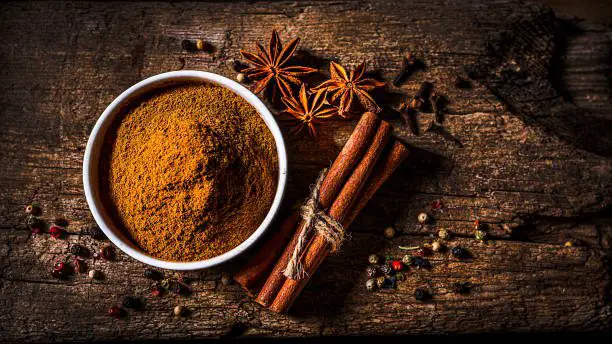
4. Carving the Ocean: Da Gama, Columbus, and the Slicing of the Globe With Black Pepper and Cinnamon
The entire “Age of Discovery” was, at its foundation, an aggressive search for a direct discount on condiments.
Under the patronage of Prince Henry the Navigator, the Portuguese spent decades inching down the unmapped coast of western Africa, battling treacherous currents and the psychological terror of sailing off the edge of the earth. In 1497, Vasco da Gama rounded the Cape of Good Hope, caught the seasonal monsoon winds that Indian Ocean sailors had known for millennia, and dropped anchor off the coast of Calicut, India, in May 1498.
When local authorities asked Da Gama what he wanted, a member of his crew reportedly gave the most succinct distillation of early European imperialism ever uttered:
“Christians and spices.”
The Portuguese were not interested in fair market competition; they had neither the manufactured goods nor the currency that Asian merchants wanted. What they had were heavily armed caravels equipped with state-of-the-art bronze naval cannons.
Under ruthless commanders like Afonso de Albuquerque, Portugal implemented a strategy of violent maritime choke points. They seized:
- Goa (1510) on India’s Malabar Coast, establishing their administrative hub for pepper.
- Malacca (1511) in Southeast Asia, controlling the narrow strait linking the Indian Ocean to the Pacific.
- Hormuz (1515), cutting off the Persian Gulf supply lines.
The Portuguese instituted the cartaz system—a maritime protection racket. Any Asian or Arab merchant ship caught sailing the Indian Ocean without a paid Portuguese pass was intercepted, its cargo seized, and its crew executed or enslaved.
Meanwhile, Spain had made its own catastrophic navigational blunder in the hunt for the same commodities. In 1492, Christopher Columbus convinced Queen Isabella of Castile that he could reach the spice-rich East Indies by sailing west across the Atlantic.
When he made landfall in the Caribbean, he was so desperate to prove his voyage financially viable that he engaged in hasty botanical wishful thinking. He found local indigenous chilies (Capsicum) and declared them to be “pepper”—which is why the English-speaking world still confuses unrelated bell peppers and jalapeños with Indian Piper nigrum. He stripped the bark from West Indian shrubs and insisted it was cinnamon.
The competition between Spain and Portugal became so heated that in 1494, Pope Alexander VI intervened. The result was the Treaty of Tordesillas—and later, the Treaty of Zaragoza (1529).
With the stroke of a quill, European powers drew an imaginary line pole-to-pole through the Atlantic Ocean, and later through the Pacific. Spain took the lands to the west; Portugal took the lands to the east. Two nations literally partitioned the globe between themselves, with the primary objective of securing exclusive access to the origins of black pepper, cinnamon, nutmeg, and cloves.
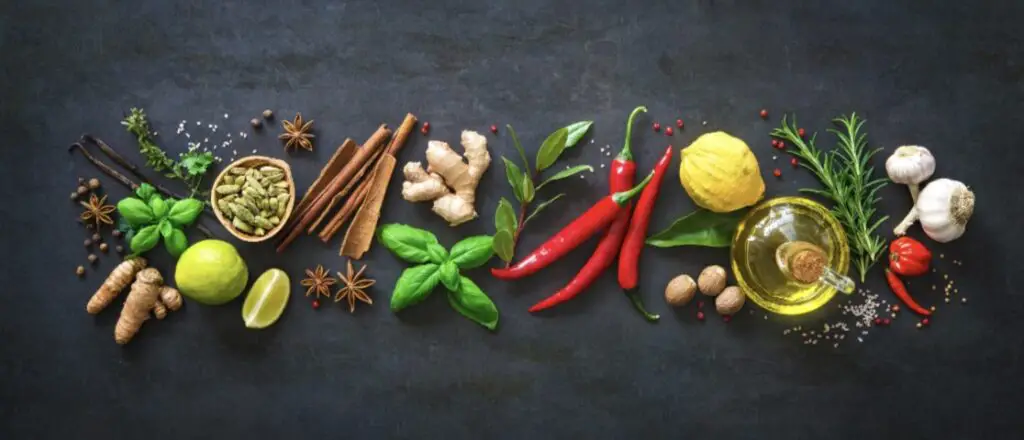
5. Ceylon and the Architecture of Monopolies and Black Pepper and Cinnamon
If black pepper was the workhorse of the spice trade, cinnamon was its crown jewel. Pepper grew across a relatively wide belt of the Indian subcontinent and Southeast Asia; true cinnamon, however, was stubbornly endemic to the southwestern coastal lowlands of Ceylon.
When the Portuguese arrived in Colombo in 1505, they found a delicate, ancient social structure. Cinnamon harvesting was carried out by the Chalia (Salagama) caste, who possessed generational, artisanal knowledge of how to score, strip, roll, and cure the tender inner bark of wild cinnamon trees into delicate, feather-layered quills.
The Portuguese did not bother planting orchards; they simply enslaved the system.
They imposed an oppressive annual tribute on the Kings of Kotte, demanding hundreds of thousands of pounds of cured cinnamon bark. If the quotas were not met, villages were razed, and harvesters were subjected to horrific physical mutilation. The Portuguese built forts along the Sri Lankan coast, systematically excluding all Muslim and local traders from the trade.
By the early 17th century, however, a new and far more ruthless power arrived on the scene: The Dutch East India Company (Vereenigde Oostindische Compagnie, or VOC).
The VOC was not merely a royal navy; it was the world’s first publicly traded mega-corporation, possessing the legal authority to wage war, build fortresses, mint its own coinage, and establish colonies. Recognizing that cinnamon was one of the most profitable line items on earth, the Dutch allied with the local Kingdom of Kandy to expel the Portuguese from Ceylon, completing their conquest by 1658.
The Sinhalese quickly realized they had traded a wolf for a tiger. The Dutch turned Ceylon into a corporate plantation.
The Economics of Artificial Scarcity and Black Pepper and Cinnamon
The VOC understood a fundamental principle of modern economics: extreme profit requires controlled supply. If too much cinnamon reached the warehouses of Amsterdam, prices would collapse.
To maintain astronomical profit margins, the Dutch implemented draconian market manipulations:
- The Death Penalty for Wild Bark: Unlicensed possession, cutting, or trading of a single cinnamon tree in Ceylon was punishable by immediate execution.
- Controlled Burning: When harvests were unusually abundant, the Dutch did not sell the surplus. In Amsterdam, corporate directors ordered massive pyres of cinnamon, nutmeg, and cloves burned at the docks. Witnesses reported that the city of Amsterdam smelled like a bakery for weeks, while the smoke choked the harbor—all to keep the price of a pound of cinnamon higher than a worker’s monthly wage.
- Smuggling Safeguards: Exporting live cinnamon seedlings or seeds was treated as high treason. The Dutch kept the island under a tight naval blockade to ensure no rival nation could smuggle the genetic material out.
For over a century, the VOC extracted massive wealth from the sweat of the Chalia harvesters, funneling capital into the Dutch Golden Age—funding the canvases of Rembrandt and Vermeer, the canals of Amsterdam, and the architecture of the modern banking system.
6. Botanical Espionage and the Great Leveling
No monopoly lasts forever. The very value of the spice trade made its secret supply chains irresistible targets for corporate and botanical espionage.
The first major blow was struck by the French. In the mid-18th century, Pierre Poivre, an eccentric French horticulturist, former missionary, and colonial administrator, grew obsessed with breaking the Dutch monopoly on spices.
Disguised and working with corsairs, Poivre orchestrated daring, covert raids on Dutch-controlled ports in the East Indies between 1769 and 1770. He managed to smuggle out fertile clove and nutmeg seedlings, along with pepper cuttings, hidden aboard French vessels. He transported them to the French island colonies of Isle de France (Mauritius) and Bourbon (Réunion), successfully cultivating them in tropical soil outside the reach of the VOC.
Shortly thereafter, during the Napoleonic Wars, the British invaded and seized Ceylon from the Dutch in 1796. The British East India Company took over the cinnamon trade, but the world was already changing.
British botanists realized that keeping the plant hostage on a single island was an outdated strategy. They transplanted cinnamon to their expansive territories in southern India, the West Indies, and the Seychelles. Concurrently, cultivators realized that cassia (Cinnamomum cassia), a hardier, thicker, and more pungent relative of true cinnamon native to southern China and Indonesia, could be grown and harvested far more cheaply.
Within decades, the supply of black pepper and cinnamon exploded. What had once required an armed expeditionary fleet to obtain could now be grown in bulk across half the tropical world.
By the mid-19th century, spice prices cratered. The exorbitant profit margins evaporated. The great spice monopolies collapsed, leaving behind colonial infrastructures that pivoted to new, industrial cash crops: rubber, tea, coffee, and palm oil.

7. The Culinary Aftershocks: How the Fall of Spices Reshaped the Plate
The democratization of spices triggered an ironic, profound revolution in European gastronomy.
During the Medieval and Renaissance eras, European elite cuisine was overwhelmingly heavily spiced. Dishes were dense with combinations of cinnamon, ginger, cloves, sugar, and pepper—not because it tasted balanced, but because it tasted expensive. Food was a performance of aristocratic wealth. If a duke hosted a banquet, the swan on the table was gilded with gold leaf and stuffed with cinnamon-heavy sweetbreads.
However, as the spice trade was deregulated and mass-market shipping made black pepper and cinnamon cheap enough for the rising working and merchant classes, the aristocracy faced a crisis: how do you signal status when the common chimney sweep can afford pepper on his cabbage?
The answer was invented in 17th- and 18th-century France: the birth of Haute Cuisine.
Led by legendary chefs like François Pierre de La Varenne, French culinary philosophy executed a sharp, deliberate U-turn. They rejected the heavy, spiced medieval sauces, dismissing them as crude and dated. Instead, they championed a new ethos: food should taste like itself.
- Rich, native butter replaced exotic aromatics.
- Native herbs—parsley, thyme, bay leaf, chives, tarragon—replaced cinnamon, nutmeg, and ginger in savory dishes.
- Spices were segregated. Pepper remained as a universal seasoning because of its chemical ability to stimulate taste receptors, but cinnamon was banished almost entirely from meat and savory preparations in the West, demoted to pastries, breakfast foods, and desserts.
Meanwhile, in the colonized lands where spices were grown and traded, the ingredients fused permanently into the bedrock of local foodways. Pepper had long anchored Indian rasams and curries; cinnamon found its way deeply into Persian stews, Mexican moles (via the Spanish Manila Galleons), and Moroccan tagines.
The global map had been drawn, and the world’s palates had been permanently scrambled.
The Relics on Your Counter including Black Pepper and Cinnamon
The next time you reach for the spices on your counter, look at them with the historical weight they carry.
That coarse black powder was once traded berry-for-berry against Roman silver. It was the reason Vasco da Gama fired broadsides into peaceful fishing fleets in Calicut and why Spanish caravels crossed the Atlantic to plunge headlong into the unknown.
That warm, sweet-smelling stick of cinnamon was once the subject of ghost stories about winged serpents, the catalyst for the bloody enslavement of generations of Sri Lankan peelers, and the secret fuel behind the rise of the modern multinational corporation.
We live in an age that takes botanical abundance for granted. We marvel at the global supply chains of semiconductors and rare-earth minerals, wondering how access to them will shape future wars and redraw national alliances.
Yet the template for that entire apparatus—the navies, the corporate charters, the trade treaties, the colonies, and the maps of the continents themselves—was already written. It was drafted centuries ago, sketched out in the dust of crushed black peppercorns and curled sheets of sweet, stolen bark.

At A Bus On A Dusty Road, we talk about travel, life, and ex-pat living. We are all about “Living Life As A Global Citizen.” We explore social, cultural, and economic issues and travel.
We would love to have you be part of our community. Sign up for our newsletter to keep up-to-date by clicking here. If you have any questions, you can contact me, Anita, by clicking here.
Listen to our Podcast called Dusty Roads or the Deep Dive By Dusty Roads. You can find it on all major podcast platforms. Try out listening to one of our podcasts by clicking here.
Subscribe to our A Bus On A Dusty Road YouTube Channel with great videos and information by clicking here.
Related Questions
The Universal Language of the Plate: How Food Bridges Divides and Brings Us Together
Food is fundamentally about survival; it is the biological fuel we need to exist. But human civilization has transformed this biological necessity into our most profound cultural expression. Food is a language that doesn’t require translation. It is a sensory archive of history, geography, and tradition. Most importantly, food is the ultimate connector—the glue that binds families, communities, and even disparate cultures together.
The Universal Language of the Plate: How Food Bridges Divides and Brings Us Together Read more by clicking here.
The Invisible Engine: Balancing the Scales for Women in the Informal Economy
If you were to ask the average person to picture the global economy, they might imagine stock market floors, bustling factories, or gleaming corporate towers. They are less likely to picture a woman weaving textiles in her living room in Lahore, a domestic worker navigating multiple households in Lima, or a roadside food vendor in Phnom Penh. Yet, these women are not the margins of the economy; in many parts of the world, they are its very engine.
The Invisible Engine: Balancing the Scales for Women in the Informal Economy Click here to discover more.
A Global Plate: 10 Dishes That Define a Country’s Culture
Food is perhaps the most accessible, tangible, and deeply sensory gateway into a culture. It is far more than mere sustenance; it is an edible archive of history. A single dish can tell the story of ancient trade routes, colonial occupations, geographical landscapes, religious beliefs, and the daily rhythms of a people’s lives. When we sit down to a meal in a foreign land, we aren’t just consuming calories; we are consuming identity.