
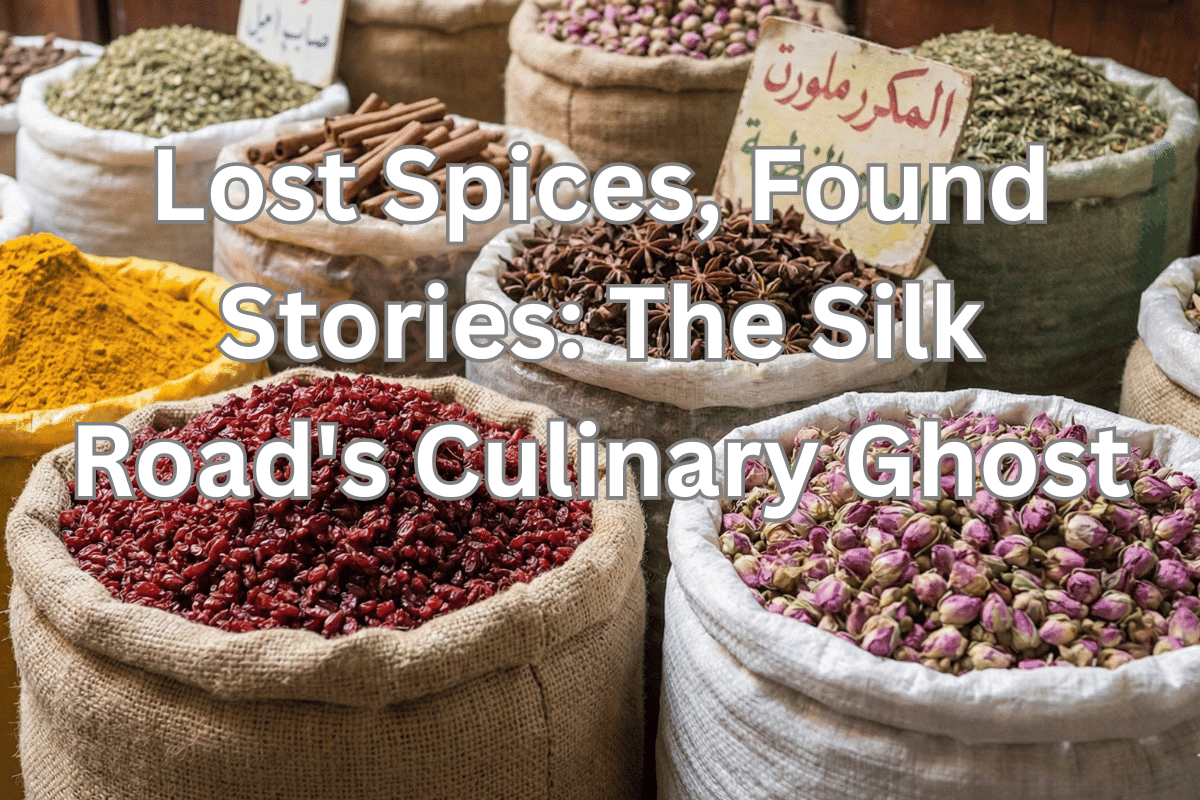
Imagine a visual feast: vibrant piles of saffron and turmeric, the intricate lines of ancient maps, and the artistry of modern fusion dishes plated with meticulous care. Now, picture these elements connected by an invisible thread, stretching across continents and centuries.
The Silk Road wasn’t just a route for trading silk and spices. It was a sprawling network of cultural exchange, a highway of ideas, ingredients, and innovation that shaped civilizations as much as it connected them. From the bustling markets of Xi’an in China to the spice bazaars of Istanbul, the Silk Road was a culinary crossroads where flavors mingled, techniques evolved, and food became a universal language.
Table of Contents
- What if your favorite meal has a secret 2,000-year-old history?
- The Ancient Palate: Beyond Just Spices
- Modern Maestros: Reinterpreting History on the Plate
- The Enduring Legacy: Taste of Global Connection
- Your Turn: Bringing Ancient Flavors Home
- Final Thoughts
- Related Questions
What if your favorite meal has a secret 2,000-year-old history?
What if the flavors you savor today—your favorite curry, pasta, or dessert—carry whispers of a journey that began over 2,000 years ago?
Today, we’re rediscovering this rich history through the lens of “culinary archaeology.” This isn’t just about cooking—it’s about unearthing flavors, reviving forgotten ingredients, and bringing ancient techniques back to life.
The Silk Road’s culinary ghosts are not relics of the past; they are vibrant echoes that continue to shape Michelin-star menus, home kitchens, and global cuisine.
Join us on this journey as we delve into the ancient palate, meet modern chefs reinterpreting history, and explore how the Silk Road’s culinary legacy offers a taste of global connection—and a glimpse into the future of food.
The Ancient Palate: Beyond Just Spices
When we think of the Silk Road, our minds often drift to the fragrant spices that traveled its length—cinnamon, nutmeg, cloves, and saffron.
But the ancient palate was far richer than just spices. Alongside these aromatic treasures came forgotten grains, dried fruits, nuts, and cooking techniques that gave rise to culinary traditions still alive today.
Forgotten Grains: Khorasan Wheat and Fonio
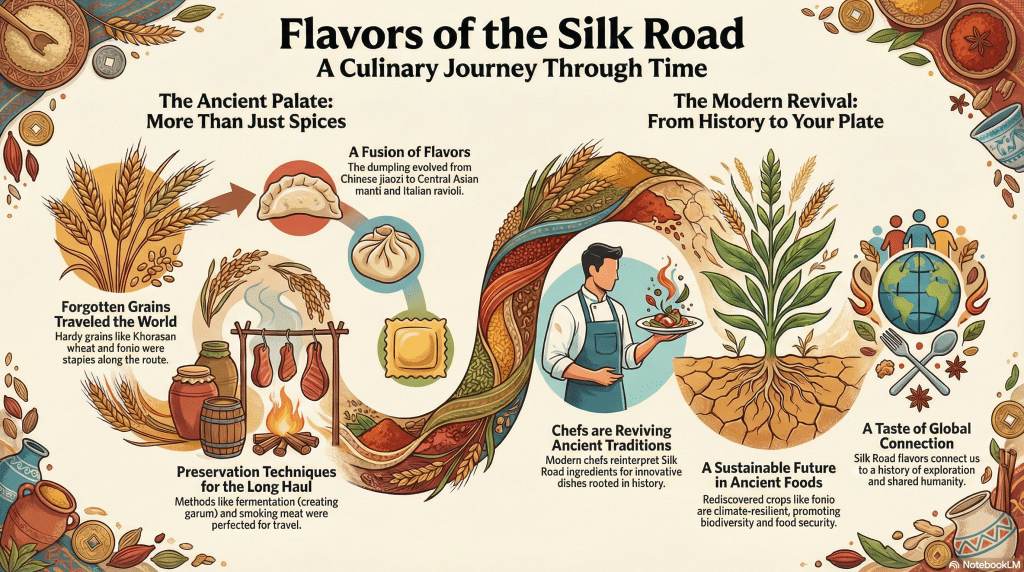
One of the Silk Road’s lesser-known treasures is khorasan wheat, an ancient grain native to the Fertile Crescent. Known for its nutty flavor and chewy texture, khorasan wheat was a staple in ancient kitchens. Its resilience and nutritional value made it a prized crop for traders and farmers alike.
Today, it’s making a comeback in artisanal breads, pastas, and even craft beers, offering a delicious alternative to modern wheat.
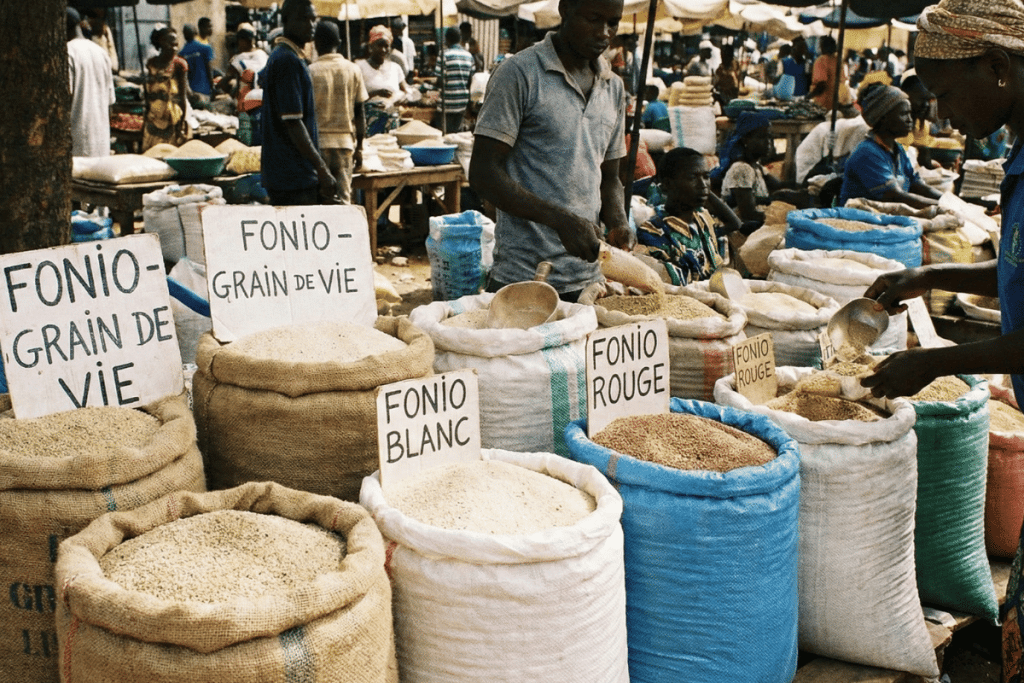
Another ancient grain that traveled the Silk Road is fonio, a tiny, drought-resistant grain native to West Africa.
Often referred to as the “grain of the ancestors,” fonio is packed with nutrients and has a subtle, nutty flavor. It’s now being rediscovered by chefs and food activists who see its potential to combat food insecurity and promote sustainable agriculture.
Unique Dried Fruits and Nuts
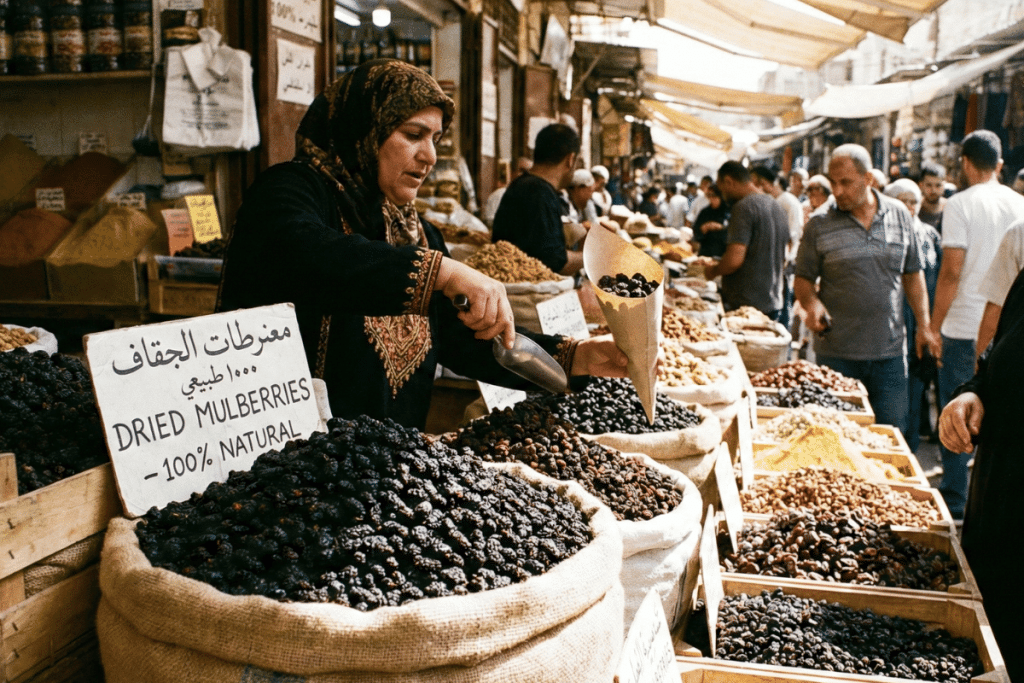
The Silk Road was also a highway for dried fruits and nuts, which were prized for their long shelf life and rich flavors.
Mulberries, for example, were a favorite snack among Persian traders and are still used in Middle Eastern desserts.
Barberries, with their tart, citrusy flavor, became a staple in Persian rice dishes like zereshk polo.
Pistachios, originally cultivated in the Middle East, traveled westward to become a key ingredient in Italian gelato and French pastries.
Ancient Cooking Methods: Fermentation and Preservation
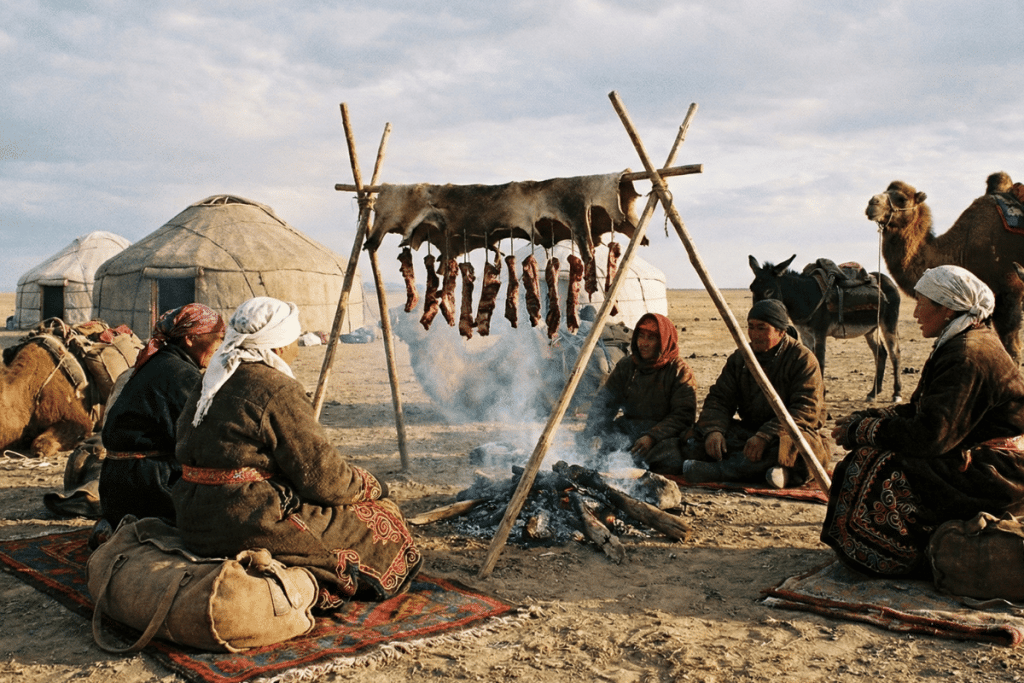
Beyond ingredients, the Silk Road was a conduit for culinary innovation. Ancient cooks developed ingenious methods to preserve food for long journeys, many of which are still in use today.
Fermentation was one such technique, used to create staples like kumis, a fermented mare’s milk popular among Central Asian nomads, and garum, a fermented fish sauce beloved in the Roman Empire and a precursor to modern condiments like soy sauce.
Smoking and drying meats were other essential techniques for preserving food. Nomadic tribes along the Silk Road perfected methods for creating long-lasting, flavorful foods like pastirma (a cured meat from Turkey) and biltong (a type of dried meat similar to jerky).
These methods not only ensured sustenance during long journeys but also introduced smoky, umami-rich flavors that became hallmarks of regional cuisines.
Cultural Exchange: A Fusion of Flavors
The Silk Road wasn’t just about trading goods—it was a meeting place for cultures, where culinary traditions blended and evolved.
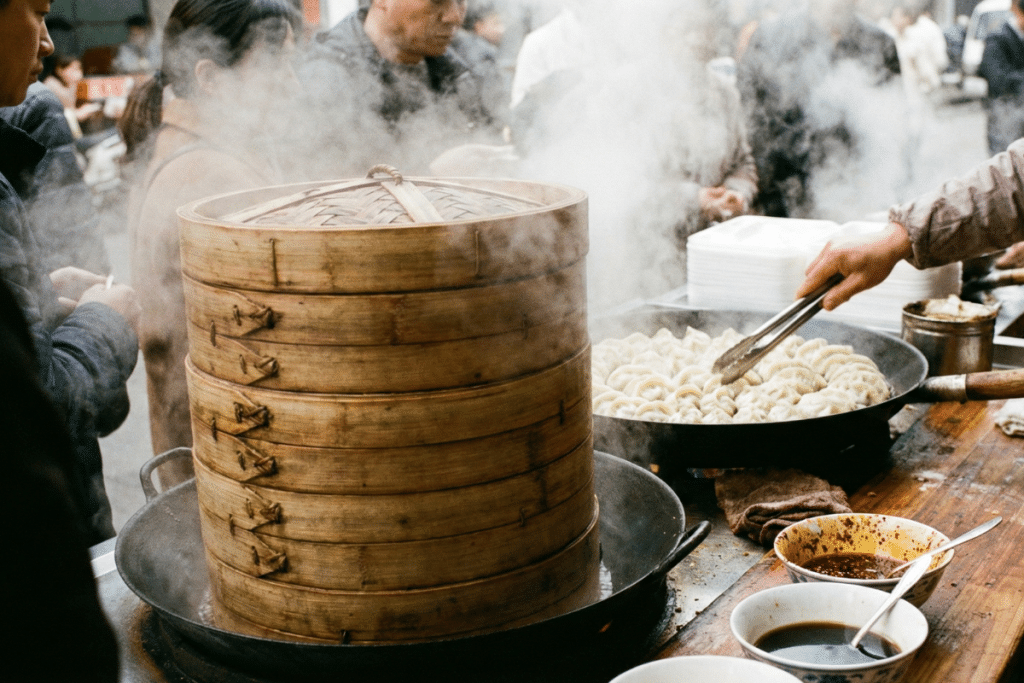
Take the humble dumpling, for example. From Chinese jiaozi to Central Asian manti and Italian ravioli, the dumpling is a testament to the Silk Road’s role in shaping global cuisine.
Each culture adapted the dish to its local ingredients and tastes, creating a culinary lineage that spans continents.
Modern Maestros: Reinterpreting History on the Plate
Today, chefs around the world are turning to the Silk Road for inspiration, reimagining ancient flavors and techniques to create dishes that are both innovative and deeply rooted in tradition. These modern culinary maestros are not just cooks; they are storytellers, historians, and artists, bringing the past to life on the plate.
Chef Spotlight: Reviving Ancient Techniques
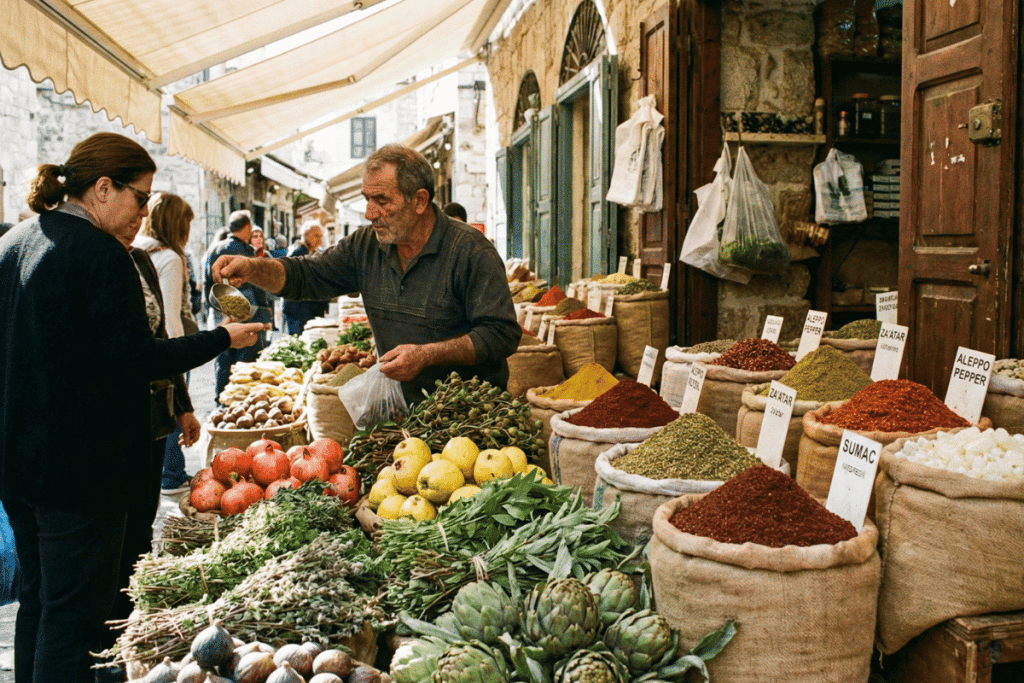
One such chef is Ana Sortun, a James Beard Award-winning chef known for her Mediterranean-inspired cuisine. At her Boston-based restaurant, Oleana, she incorporates ancient ingredients like sumac, freekeh, and za’atar into her dishes.
By studying the culinary traditions of the Middle East, she creates meals that are both modern and deeply connected to history.
Another example is Sanjar Damirov, an Uzbek chef who has brought the flavors of Central Asia to New York City.
At his restaurant, he uses traditional bread-making techniques, such as baking in a tandyr oven, to create authentic Uzbek flatbreads. His signature dish, a lamb and apricot pilaf, is a direct nod to the Silk Road’s legacy of combining sweet and savory flavors.
Behind the Scenes: The Creative Process
For chefs like Sortun and Damirov, the process of reviving ancient flavors is both challenging and rewarding. It begins with research—poring over historical texts, consulting with food historians, and experimenting with recipes that haven’t been cooked in centuries.
Then comes the challenge of sourcing authentic ingredients, often working with local farmers or specialty suppliers to grow ancient grains and spices.
The final step is translation: taking these ancient flavors and techniques and adapting them for modern palates. This might mean tweaking a recipe to suit contemporary tastes or finding new ways to present a traditional dish.
The result is a culinary experience that feels both innovative and timeless, a true fusion of past and present.

The Enduring Legacy: Taste of Global Connection
The Silk Road may no longer exist as a physical trade route, but its culinary legacy is alive and well. Every time we sprinkle cinnamon on our coffee, enjoy a plate of pasta, or savor a fragrant curry, we’re tasting the echoes of this ancient network of exchange.
Rediscovering Global Connections
The Silk Road reminds us that food is a universal language, a way of connecting people across cultures and continents.
When you bite into a dish that combines saffron from Iran, noodles from China, and olive oil from the Mediterranean, you’re tasting a story of exploration, innovation, and shared humanity.
Sustainability and Biodiversity
Rediscovering ancient ingredients isn’t just about honoring the past—it’s also about building a more sustainable future. Many of the grains and plants traded along the Silk Road are more resilient to climate change than modern crops. For example, fonio requires minimal water to grow, making it an ideal crop for arid regions. By embracing these ingredients, we can promote biodiversity and create food systems that are better equipped to withstand the challenges of a changing climate.
The Future of Food
As we look to the future, the lessons of the Silk Road can inspire us to rethink what we eat and how we eat it. What if the next big culinary trend isn’t about inventing something new, but about rediscovering something old? What if the future of gourmet dining lies in the past?
Chefs, farmers, and food enthusiasts are already exploring these questions, using history as a springboard for innovation. By looking to the Silk Road, we can find new ways to celebrate our culinary heritage while addressing the challenges of the modern world.
Your Turn: Bringing Ancient Flavors Home
You don’t need to be a Michelin-star chef to explore the flavors of the Silk Road. Many of these ancient ingredients and techniques are surprisingly accessible, and experimenting with them can be a fun and rewarding way to connect with history.
A Quick Recipe: Persian-Inspired Barberry Rice
Try this simple recipe inspired by the Silk Road:
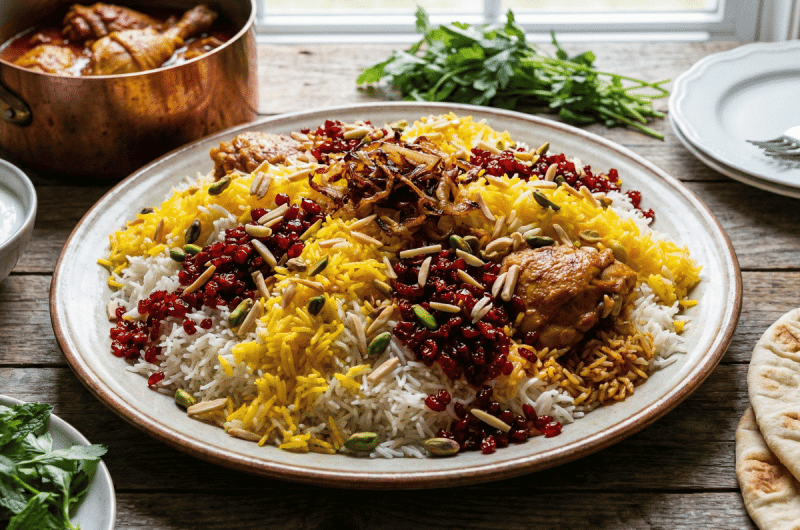
Persian-Inspired Barberry Rice
Course: Side DishCuisine: PersianDifficulty: Easy4
servings15
minutes10
minutes25
minutesIngredients
2 cups basmati rice
1/2 cup dried barberries (or dried cranberries as a substitute)
2 tbsp butter or ghee
1/4 tsp saffron threads, dissolved in 2 tbsp warm water
1/4 cup slivered almonds or pistachios
1/4 cup golden raisins
Salt to taste
Directions
- Rinse the rice under cold water until the water runs clear. Cook according to the package instructions.
- Soak the barberries in warm water for 10 minutes, then drain.
- In a small pan, melt the butter or ghee. Add the barberries, almonds, and raisins, and sauté for 2-3 minutes.
- Once the rice is cooked, fluff it with a fork and mix in the saffron water.
- Top the rice with the barberry mixture and serve warm.
Explore More at Home
From trying your hand at making fermented vegetables to experimenting with ancient grains like freekeh or millet, there are countless ways to bring the Silk Road into your kitchen. Visit your local farmers’ market or specialty food store to discover unique ingredients, and let your culinary imagination run wild.
Final Thoughts
The Silk Road’s culinary ghosts are more than just relics of the past—they are living, breathing influences that continue to shape the way we eat today. Every bite we take is an opportunity to connect with history, to celebrate the diversity of global cuisine, and to honor the countless hands that have prepared these flavors before us.
So the next time you sit down to a meal, ask yourself: What stories are hidden in these flavors? What ancient journeys brought these ingredients to your plate? And how can you, in your own kitchen, keep the spirit of the Silk Road alive?
Because food is more than nourishment—it’s a journey. And the Silk Road’s culinary echoes are still vibrant, delicious, and waiting to be rediscovered.
Deep Dive Podcast
Check out our Deep Dive Podcast
At A Bus On A Dusty Road, we talk about travel, life, and ex-pat living. We are all about “Living Life As A Global Citizen.” We explore social, cultural, and economic issues and travel.
We would love to have you be part of our community. Sign up for our newsletter to keep up-to-date by clicking here. If you have any questions, you can contact me, Anita, by clicking here.
Listen to our Podcast called Dusty Roads. You can find it on all major podcast platforms. Try out listening to one of our podcasts by clicking here.
Subscribe to our A Bus On A Dusty Road YouTube Channel with great videos and information by clicking here.
Related Questions
Unpacking Vietnamese Cuisine: The Secret to Sweet, Sour, Salty, and Spicy Harmony
Think you know Vietnamese food? Most people immediately think of iconic dishes like pho or banh mi, but the true magic of Vietnamese cuisine isn’t just in these beloved recipes—it’s in the subtle alchemy of a few essential ingredients. These foundational components—fish sauce, lime, fresh herbs, and chili—create a delicate balance of sweet, sour, salty, and spicy flavors that define the heart and soul of Vietnamese cooking.
Read our blog Unpacking Vietnamese Cuisine: The Secret to Sweet, Sour, Salty, and Spicy Harmony by clicking here.
The Vietnamese Bun Cha Food Dish, All You Need To Know
Bún Chả is a Vietnamese food dish that is thought to have originated in North Vietnam. It is made from rice noodles, grilled pork, salad, and a Bún Chả fish sauce mixture. It is a dish you can learn to make and serve in your home. Bún Chả became very famous when the U.S. President Barack Obama sat down with CNN’s Anthony Bourdain in a small local Bún Chả noodle shop in Hanoi, Vietnam.
Read our blog The Vietnamese Bun Cha Food Dish, All You Need To Know by clicking here.
Why is Rice Important to the Vietnamese?
Rice is essential to the Vietnamese because rice is one of the world’s most important staple foods. Due to its climate, Vietnam is one of the world’s leading rice producers. As with many things in Vietnam, there is folklore and legends about rice and rice production. You can visit many places in Vietnam to see some spectacular rice fields and rice terraces.
You can find out more about this by reading our blog, Why Rice is Important in Vietnam, What You Need To Know by clicking here.