
Apple pie is one of the most iconic desserts in the United States, often associated with comfort, tradition, and even patriotism. The phrase “as American as apple pie” has become a cultural idiom, symbolizing the essence of American life.
Did you know that apple pie didn’t originate in the United States? Its history is as rich and layered as the dessert itself, spanning centuries and continents. Read on as we’ll explore the fascinating history of apple pie, its journey to becoming an American staple, and provide you with a classic American apple pie recipe, including a buttery, flaky pie crust.
Table of Contents
- The Origins of Apple Pie
- Apple Pie’s Journey to America
- How Apple Pie Became an American Staple
- A Classic American Apple Pie Recipe
- Why Apple Pie Endures
- Related Questions
The Origins of Apple Pie

Apples: A Global Fruit
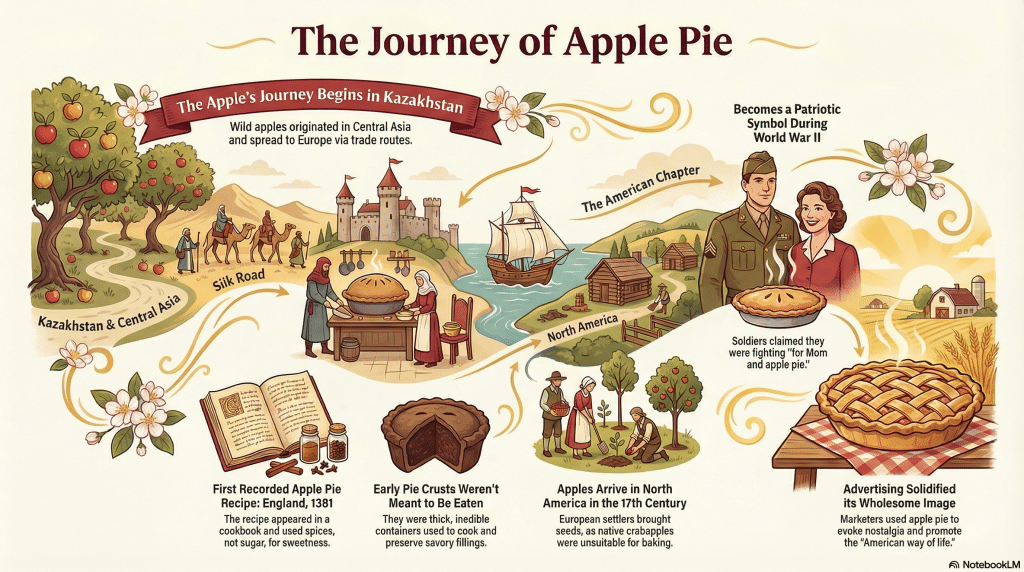
The story of apple pie begins with the apple itself, a fruit that has been cultivated for thousands of years. Apples are believed to have originated in the region of Central Asia, specifically in what is now Kazakhstan, where wild apple trees still grow. From there, apple cultivation spread to Europe via trade routes and migration.
By the time of the Roman Empire, apples were a staple fruit in many European diets. The Romans brought apple cultivation techniques to Britain, where the fruit flourished in the cooler climate. However, these apples were not the sweet varieties we enjoy today; they were often tart and better suited for cooking than eating raw.
The First Apple Pies
The concept of pie as a dish predates the apple pie itself. The earliest pies were savory and date back to ancient Egypt and Greece. These early pies consisted of a crust made from grains and water, which acted as a container for meat and other savory fillings. The crust was not meant to be eaten but served as a vessel for cooking and preservation.
The first recorded recipes for apple pie appeared in Europe during the Middle Ages, around the 14th century.
One of the earliest known recipes for apple pie comes from England, documented in a cookbook called “The Forme of Cury” (circa 1381). This medieval apple pie recipe included apples, figs, raisins, pears, and spices like saffron, all encased in a pastry shell. Notably, sugar was not used, as it was considered an expensive luxury at the time. Instead, honey or dried fruits were used to sweeten the dish.
Apple Pie’s Journey to America
The Arrival of Apples in the New World
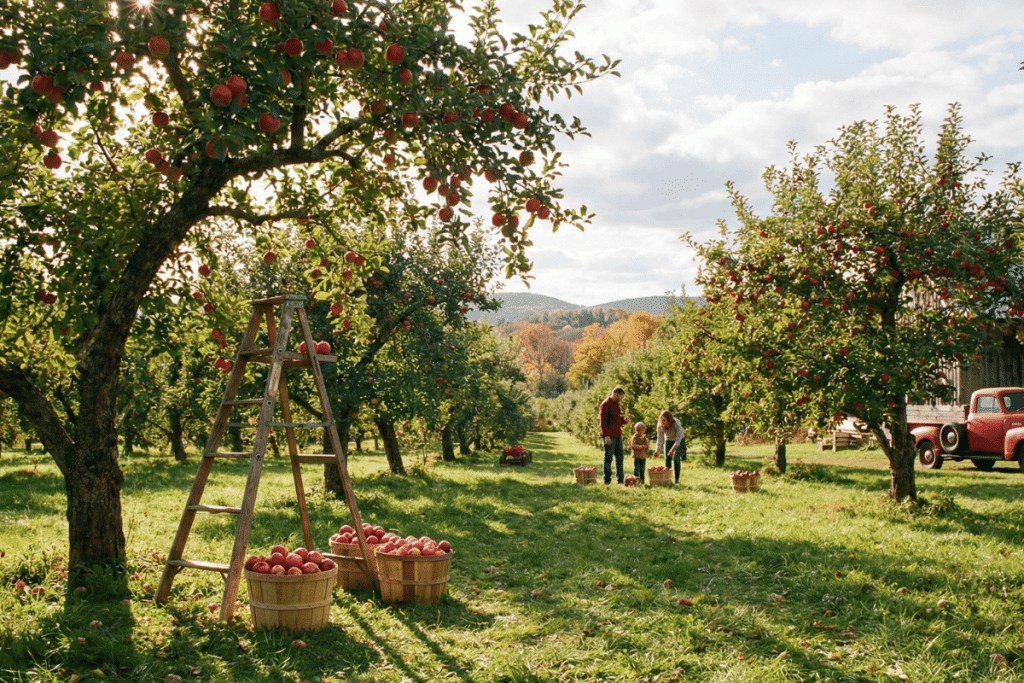
When European settlers arrived in North America in the 17th century, they brought apple seeds and trees with them. The only apples native to North America were small crabapples, which were not suitable for eating or baking. European settlers quickly began cultivating apple orchards in the colonies, and apples became a staple fruit in the New World.
One of the most famous figures associated with the spread of apples in America is Johnny Appleseed (real name: John Chapman), a nurseryman who planted apple orchards across the Midwest in the late 18th and early 19th centuries. While many of the apples grown from his seeds were used for making cider rather than eating, his efforts helped establish apple trees as a cornerstone of American agriculture.
The Rise of Apple Pie in American Culture
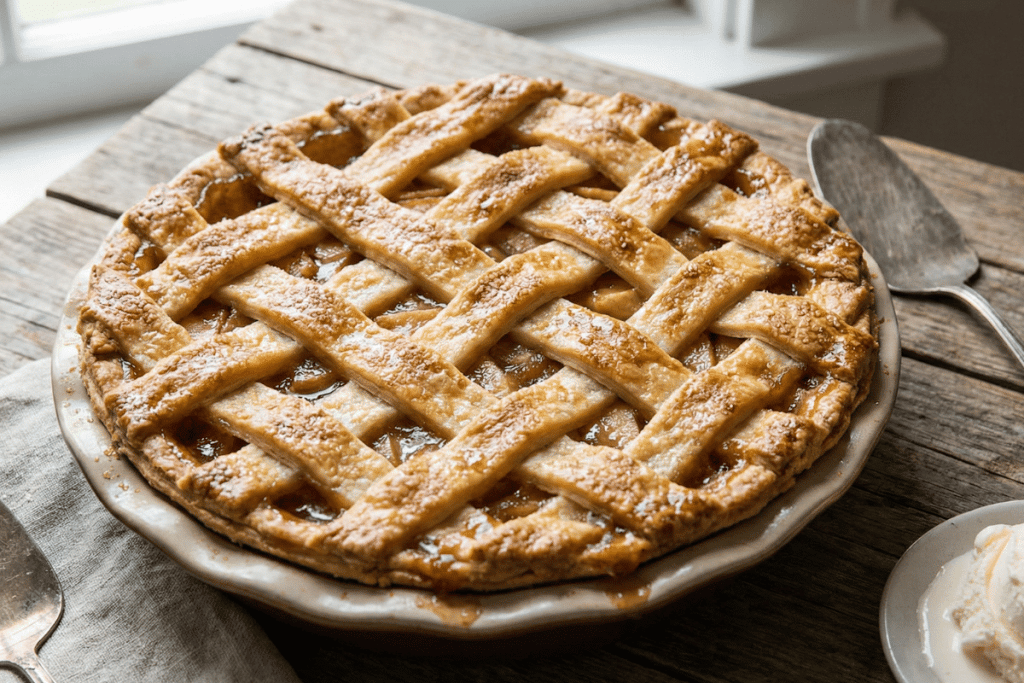
Apple pie became a popular dessert in America because of the abundance of apples and the influence of European culinary traditions. By the 18th century, apple pie was a common dish in American households. It was practical, as apples could be stored for long periods, and the pie crust helped preserve the fruit filling.
Over time, apple pie became more than just a dessert—it became a symbol of American identity. During World War II, soldiers would say they were fighting “for Mom and apple pie,” cementing its place as a patriotic icon. The phrase “as American as apple pie” gained popularity in the 20th century, further solidifying the dessert’s association with American culture.
How Apple Pie Became an American Staple
A Symbol of Home and Comfort
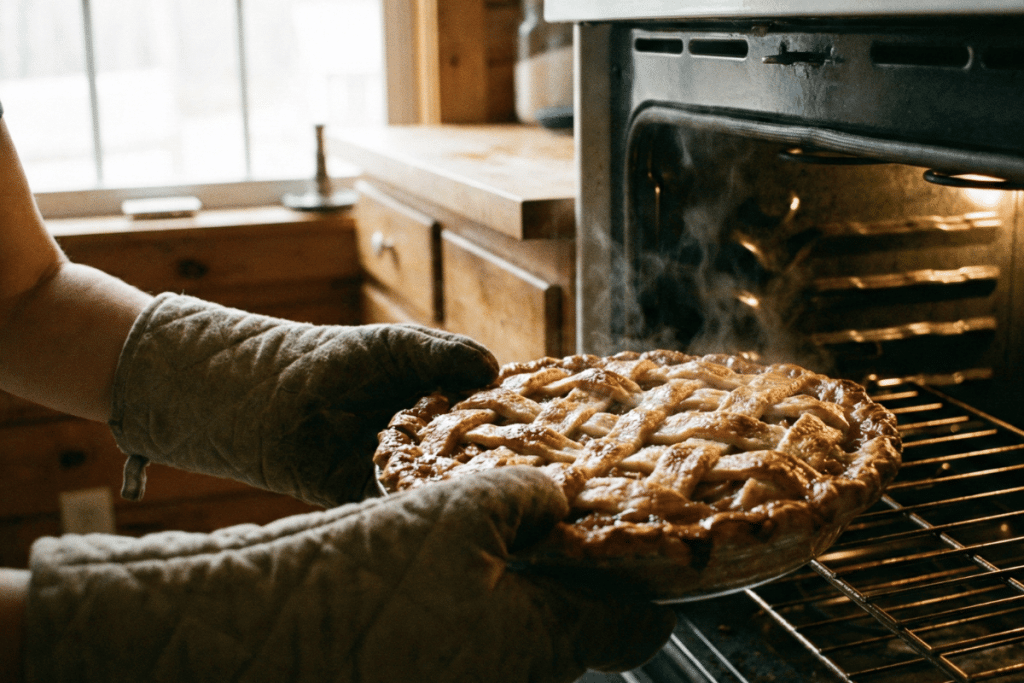
Apple pie’s rise to prominence in American culture can be attributed to its association with home, family, and comfort. In an era when most food was prepared at home, apple pie was a way to use seasonal ingredients and create a dessert that could feed a family. It became a fixture at holiday meals, community gatherings, and celebrations, making it a shared cultural experience.
The Influence of Advertising
In the early 20th century, apple pie became a marketing tool. Advertisers used the image of a warm, homemade apple pie to evoke feelings of nostalgia and wholesomeness. This was particularly evident during the Great Depression and World War II, when companies used apple pie in advertisements to promote patriotism and the American way of life.
A Classic American Apple Pie Recipe
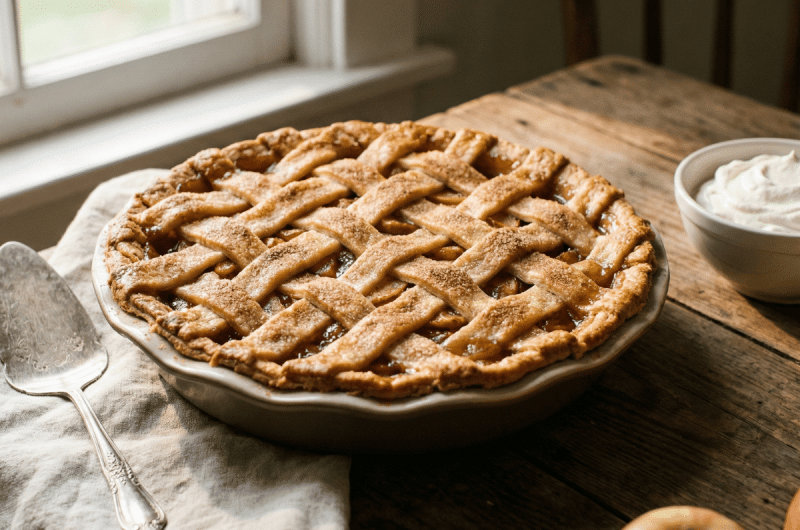
Now that we’ve explored the history of apple pie, it’s time to make your own! Below is a recipe for a traditional American apple pie, complete with a buttery, flaky pie crust.
American Apple Pie Recipe
Course: Culinary Passport4
servings30
minutes40
minutes1
hour10
minutesIngredients
- Pie Crust Recipe
2 ½ cups all-purpose flour
1 teaspoon salt
1 tablespoon granulated sugar
1 cup (2 sticks) unsalted butter, cold and cut into small cubes
6–8 tablespoons ice water- Apple Pie Filing
6–8 medium apples (a mix of Granny Smith, Honeycrisp, and/or Fuji), peeled, cored, and sliced
¾ cup granulated sugar
¼ cup brown sugar
1 teaspoon ground cinnamon
¼ teaspoon ground nutmeg
2 tablespoons all-purpose flour
1 tablespoon lemon juice
1 teaspoon vanilla extract
2 tablespoons unsalted butter, cut into small pieces- Egg Wash
1 egg, beaten
1 tablespoon milk
Directions
- Make the Pie Crust
- In a large mixing bowl, whisk together the flour, salt, and sugar.
- Add the cold, cubed butter to the bowl. Using a pastry cutter or your hands, work the butter into the flour mixture until it resembles coarse crumbs.
- Gradually add the ice water, one tablespoon at a time, mixing gently until the dough just comes together. Be careful not to overmix.
- Divide the dough into two equal portions, shape them into discs, and wrap them in plastic wrap. Refrigerate for at least 1 hour (or up to 2 days).
- Prepare the Apple Filling
- In a large bowl, combine the sliced apples, granulated sugar, brown sugar, cinnamon, nutmeg, flour, lemon juice, and vanilla extract. Toss until the apples are evenly coated.
- Let the mixture sit for about 15 minutes to allow the flavors to meld.
- Assemble the Pie
- Preheat your oven to 375°F (190°C).
- Roll out one disc of chilled dough on a lightly floured surface to fit a 9-inch pie dish. Carefully transfer the dough to the pie dish, pressing it gently into the bottom and sides. Trim any overhanging edges.
- Pour the apple filling into the crust, spreading it out evenly. Dot the top with the small pieces of butter.
- Roll out the second disc of dough and place it over the filling. Or cut it in strrips and make a Trim the edges, leaving about 1 inch of overhang. Tuck the edges under and crimp them to seal the pie.
- Cut a few small slits in the top crust to allow steam to escape.
- Brush the top of the pie with the egg wash for a golden, shiny finish.
- Alternative Lattice Pie Crust Top
- Roll out the second disc of dough on a floured surface. Using a sharp knife or a pastry cutter, cut the dough into strips about ½ to ¾ inch wide.
- Lay half of the strips horizontally across the top of the pie, spaced evenly apart.
- Take the remaining strips and lay them vertically over the horizontal strips, weaving them over and under to create a lattice pattern. Trim any excess dough from the edges.
- Tuck the edges of the strips under the bottom crust and crimp them together to seal the pie.
- Brush the lattice crust with the egg wash for a golden, shiny finish.
- Bake The Pie
- Place the pie on a baking sheet to catch any drips.
- Bake for 50–60 minutes, or until the crust is golden brown and the filling is bubbling.
- If the edges of the crust start to brown too quickly, cover them with aluminum foil or a pie crust shield.
- Remove the pie from the oven and let it cool for at least 2 hours before slicing
Notes
- Suggestion: Serve Apple Pie warm with vanilla ice cream on top.
Why Apple Pie Endures
Apple pie has stood the test of time for good reason. It’s a dessert that combines simplicity with versatility, allowing for endless variations while maintaining its comforting essence.
Whether served warm with a scoop of vanilla ice cream, or enjoyed cold the next day, apple pie continues to bring people together around the table.
Today, apple pie is more than just a dessert—it’s a symbol of tradition, a reminder of the past, and a celebration of the shared love for good food. Its journey from medieval England to the heart of American culture is a testament to the power of food to connect us across time and space.
The history of apple pie is a flavorful journey through time, culture, and tradition. From its medieval beginnings in England to its status as an American icon, apple pie has evolved into a dessert that represents comfort, nostalgia, and unity.
By reviving this classic recipe in your own kitchen, you’re not just baking a pie—you’re continuing a legacy that has been passed down through generations.
Try out our classic American apple pie recipe with its buttery, flaky crust and sweet, spiced apple filling. Whether you’re making it for a holiday gathering, a family celebration, or just because, this timeless dessert is sure to delight and remind you of the rich history baked into every slice.
Happy baking!
At A Bus On A Dusty Road, we talk about travel, life, and ex-pat living. We are all about “Living Life As A Global Citizen.” We explore social, cultural, and economic issues and travel.
We would love to have you be part of our community. Sign up for our newsletter to keep up-to-date by clicking here. If you have any questions, you can contact me, Anita, by clicking here.
Listen to our Podcast called Dusty Roads. You can find it on all major podcast platforms. Try out listening to one of our podcasts by clicking here.
Subscribe to our A Bus On A Dusty Road YouTube Channel with great videos and information by clicking here.
Related Questions
The Vietnamese Bun Cha Food Dish, All You Need To Know
Bún Chả is a Vietnamese food dish that is thought to have originated in North Vietnam. It is made from rice noodles, grilled pork, salad, and a Bún Chả fish sauce mixture. It is a dish you can learn to make and serve in your home. Bún Chả became very famous when the U.S. President Barack Obama sat down with CNN’s Anthony Bourdain in a small local Bún Chả noodle shop in Hanoi, Vietnam.
Read our blog The Vietnamese Bun Cha Food Dish, All You Need To Know by clicking here.
Why is Rice Important to the Vietnamese?
Rice is essential to the Vietnamese because rice is one of the world’s most important staple foods. Due to its climate, Vietnam is one of the world’s leading rice producers. As with many things in Vietnam, there is folklore and legends about rice and rice production. You can visit many places in Vietnam to see some spectacular rice fields and rice terraces.
You can find out more about this by reading our blog, Why Rice is Important in Vietnam, What You Need To Know by clicking here.
What About Vietnam’s Morning Exercise?
The mornings in Vietnam are always extremely active, with people out and about exercising. It is usually safe to go out early in Hanoi, Vietnam. The streets are always bustling with a lot of activity and excitement. People in the city tend to start their days very early. You must also get up early to see the early morning exercise. There are a lot of places in Hanoi where you can see a lot of early-morning exercisers. Starting the day early is a habit that many people have throughout all Asia.
You can see a video about morning exercise in Vietnam and read our blog called Early Morning Exercise in Hanoi, Vietnam, What You Need to Know by clicking here.