
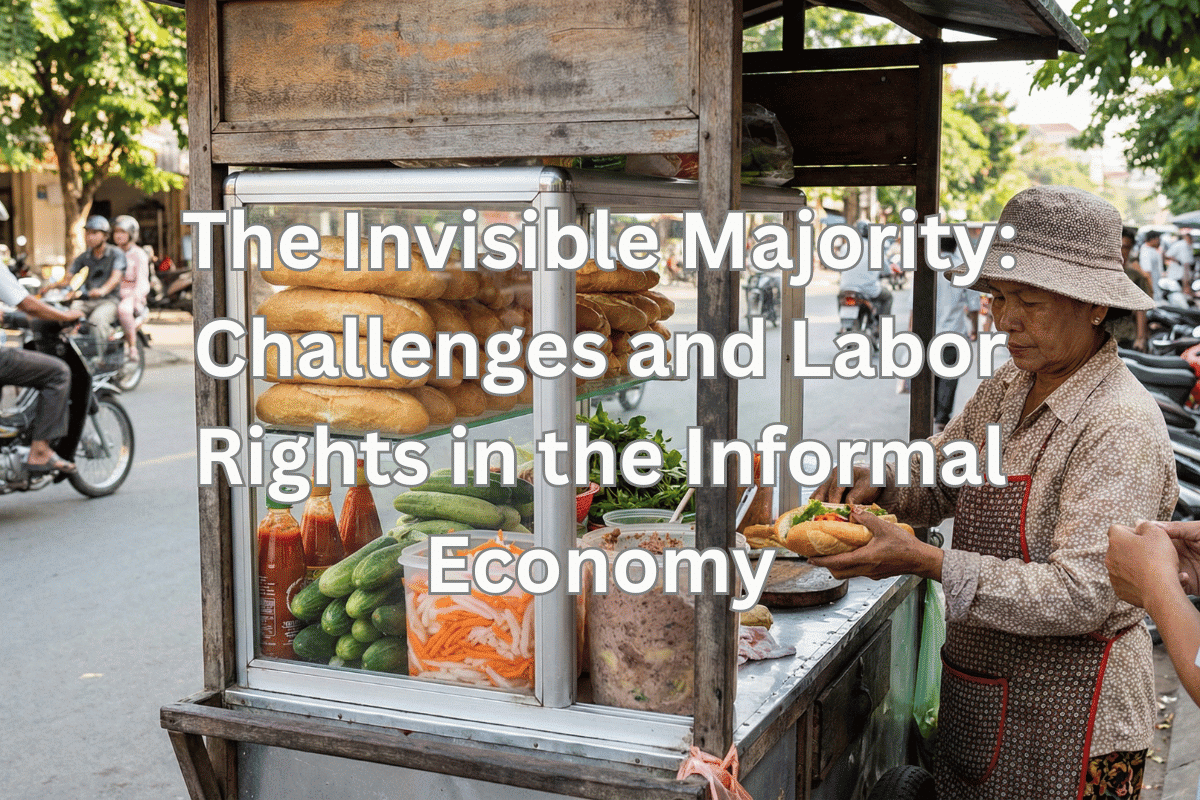
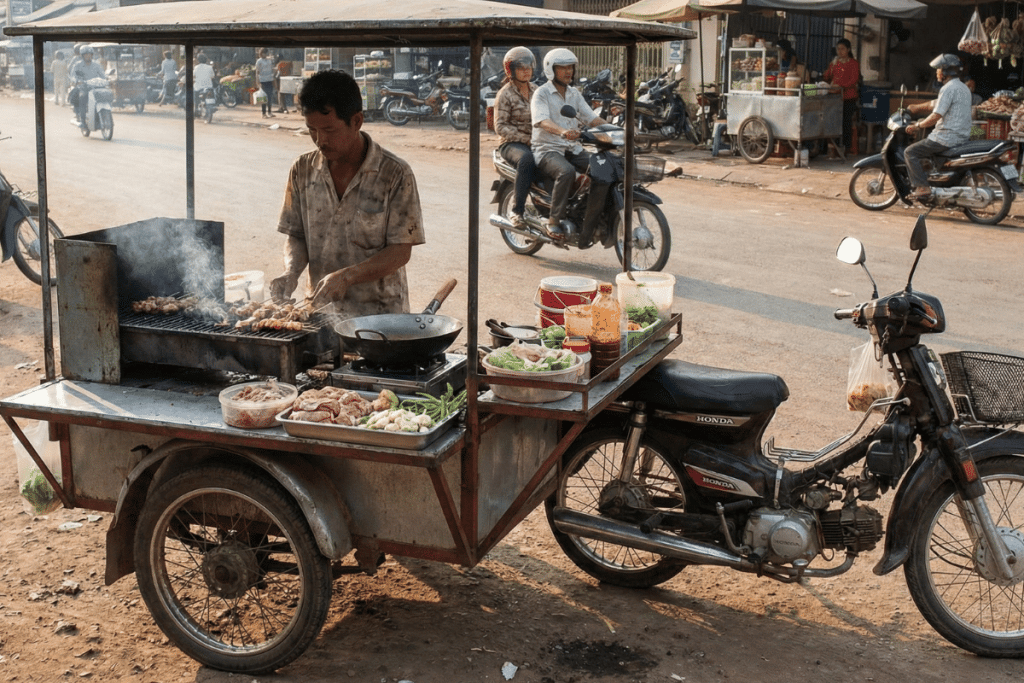
The shadow of the “informal economy” is often painted as a distant image: a bustling open-air market in Lagos, a street vendor in Bangkok, or a rickshaw driver in Mumbai. While these are vivid realities, the true scope of the informal sector is far more pervasive, reaching into the gleaming high-rises of New York and the suburban streets of London.
As of 2026, over 60% of the global workforce—roughly 2.1 billion people—operates in the informal economy. This is not a “fringe” phenomenon; it is the global standard. Yet, these workers exist in a legal and social vacuum, providing the essential labor that keeps societies running while being denied the very protections those societies are built upon.
Table of Contents
- 3 Points About The Invisible Majority: Challenges and Labor Rights in the Informal Economy
- Related Questions
3 Points About The Invisible Majority: Challenges and Labor Rights in the Informal Economy
While we often imagine the “global workforce” as a landscape of cubicles and signed contracts, the reality is far more fluid—and far more fragile.
Over 60% of the world’s workers operate in a legal shadowland where the typical safety nets of health insurance and job security simply don’t exist.
From the artisans and manufacturers in bustling Asian markets to the gig-economy freelancers in the heart of the West, understanding the struggles of this “invisible majority” is essential to grasping the true state of our modern global economy.
Here are three points about the informal economy and why it matters.
1. Defining the Invisible: What is the Informal Economy?
The informal economy, often called the “grey economy,” encompasses all economic activities that are not taxed or monitored by any form of government.
Unlike the formal sector, where jobs are defined by contracts, pay stubs, and tax IDs, informal work is defined by its vulnerability.
It is characterized by:
- Easy Entry: No formal degrees or complex licensing (usually).
- Small Scale: Operations are often one-person shows or tiny family units.
- Lack of Stability: No guaranteed hours, no severance, and no “HR” to call when things go wrong.
The Global-Local Paradox
We often mistakenly view informality as a “third-world problem.” While it’s true that in low-income countries, informality can account for up to 90% of employment, high-income nations are not immune.
In the “First World,” the informal economy persists through:
- The Gig Economy: Freelancers and “independent contractors” who lack health insurance and pension plans.
- Undocumented Labor: Workers in agriculture or construction who live in fear of deportation and have no legal recourse for wage theft.
- Domestic Work: Nannies, cleaners, and caregivers working under-the-table.
2. The Core Challenges: Life Without a Safety Net
For an informal worker, the distance between “getting by” and “total ruin” is often one bad day away. The challenges they face are not merely administrative; they are existential.
A. The Legal Black Hole
Formal labor rights are built on the existence of an “employer-employee relationship.” When you are a day laborer or a street vendor, that relationship doesn’t exist.
- No Right to Organize: Without a formal employer, joining a union is nearly impossible, stripping workers of their collective bargaining power.
- Wage Theft: In the informal world, if a “client” or boss refuses to pay, there is no labor board to appeal to.
- Zero Safety Oversight: Informal workers often handle hazardous materials or work in dangerous environments (like unregulated mines or construction sites) without protective gear or insurance.
B. The Social Protection Gap
Social security is the cornerstone of modern civilization, yet it remains a luxury for the few.
- Health Coverage: In most countries, health insurance is tied to formal employment. For an informal worker, a broken leg isn’t just a medical emergency; it’s a permanent loss of income.
- Pension and Retirement: Informal workers don’t have 401(k)s or state pensions. They work until they physically cannot, often relying on the charity of family in old age.
- Maternity and Sick Leave: There is no “paid time off.” If you don’t work today, you don’t eat tonight.
C. Financial Exclusion
Try getting a mortgage or a small business loan without a pay stub. Informal workers are often “unbanked,” forced to rely on predatory moneylenders who charge exorbitant interest rates, further trapping them in a cycle of debt.
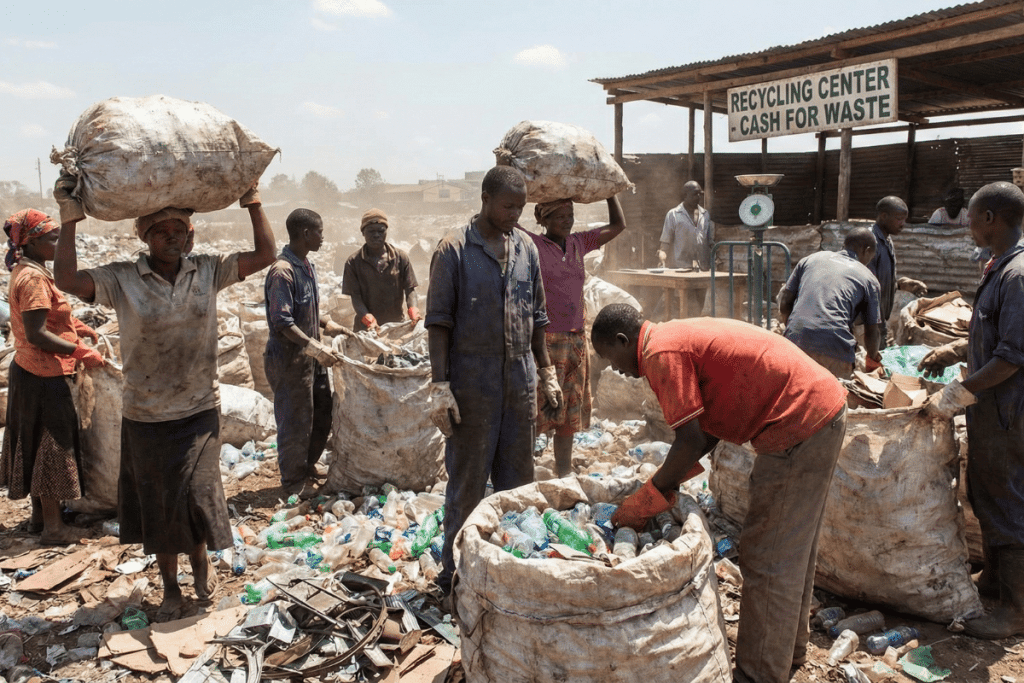
3. The Human Impact: Beyond the Statistics
To understand the informal economy, we must look at the human cost. Imagine a delivery rider in a major European city. They are technically “self-employed,” but they have no control over their rates, their hours, or their safety. They are a cog in a digital machine.
When the COVID-19 pandemic hit, formal workers in many countries received government stipends. Informal workers—the ones delivering the food and cleaning the hospitals—were often excluded because they “didn’t exist” on government registers.
“The informal economy is a safety net for the poor, but it is a net made of razor wire. It catches you, but it also cuts you.”
Informal Economy Chart Summary
The chart below shows some of the signficant differences between the informal and formal economy and why they matter.
| Feature | Formal Economy | Informal Economy |
| Contract | Legally binding | Verbal or non-existent |
| Taxation | Automatic payroll deductions | Mostly untaxed/Indirect taxes only |
| Health Insurance | Employer-provided or State-mandated | Out-of-pocket |
| Job Security | High (Notice periods/Severance) | Zero (At-will/Day-to-day) |
| Growth Potential | Access to credit and training | Limited by lack of capital |
At A Bus On A Dusty Road, we talk about travel, life, and ex-pat living. We are all about “Living Life As A Global Citizen.” We explore social, cultural, and economic issues and travel.
We would love to have you be part of our community. Sign up for our newsletter to keep up-to-date by clicking here. If you have any questions, you can contact me, Anita, by clicking here.
Listen to our Podcast called Dusty Roads or the Deep Dive By Dusty Roads. You can find it on all major podcast platforms. Try out listening to one of our podcasts by clicking here.
Subscribe to our A Bus On A Dusty Road YouTube Channel with great videos and information by clicking here.
Related Questions
The Vietnamese Bun Cha Food Dish, All You Need To Know
Bún Chả is a Vietnamese food dish that is thought to have originated in North Vietnam. It is made from rice noodles, grilled pork, salad, and a Bún Chả fish sauce mixture. It is a dish you can learn to make and serve in your home. Bún Chả became very famous when the U.S. President Barack Obama sat down with CNN’s Anthony Bourdain in a small local Bún Chả noodle shop in Hanoi, Vietnam.
Read our blog The Vietnamese Bun Cha Food Dish, All You Need To Know by clicking here.
Why is Rice Important to the Vietnamese?
Rice is essential to the Vietnamese because rice is one of the world’s most important staple foods. Due to its climate, Vietnam is one of the world’s leading rice producers. As with many things in Vietnam, there is folklore and legends about rice and rice production. You can visit many places in Vietnam to see some spectacular rice fields and rice terraces.
You can find out more about this by reading our blog, Why Rice is Important in Vietnam, What You Need To Know by clicking here.
What About Vietnam’s Morning Exercise?
The mornings in Vietnam are always extremely active, with people out and about exercising. It is usually safe to go out early in Hanoi, Vietnam. The streets are always bustling with a lot of activity and excitement. People in the city tend to start their days very early. You must also get up early to see the early morning exercise. There are a lot of places in Hanoi where you can see a lot of early-morning exercisers. Starting the day early is a habit that many people have throughout all Asia.
You can see a video about morning exercise in Vietnam and read our blog called Early Morning Exercise in Hanoi, Vietnam, What You Need to Know by clicking here.