

In a fractured world, where polarized politics and digital echo chambers seem to define our daily existence, there remains one universal domain where barriers dissolve and common ground is almost instantly established: the dinner table.
Food is fundamentally about survival; it is the biological fuel we need to exist. But human civilization has transformed this biological necessity into our most profound cultural expression. Food is a language that doesn’t require translation. It is a sensory archive of history, geography, and tradition. Most importantly, food is the ultimate connector—the glue that binds families, communities, and even disparate cultures together.
Table of Contents
- The American Disconnect: The Rise of Solitary Dining
- A Global Table: Lessons in Unity Through Food
- 1. Italian Culture: The Sacred Space of the Table
- 2. Chinese Culture: The Symbolism of the Round Table
- 3. Indian Culture: A Sensory communal Experience
- 4. Mexican Culture: Food as Collective Celebration
- 5. Greek Culture: The Art of Philoxenia
- 6. Middle Eastern Culture: Generosity on a Platter
- 7. Ethiopian Culture: The Bond of Gursha
- 8. Japanese Culture: Aesthetics and Shared Rituals
- Returning to the Table
- Deep Dive Podcast
- Related Questions
Sociologist Alice Julier argues that sharing food “levels the playing field.” When we sit down to break bread with others, our social masks tend to slip.
We become vulnerable, nourished, and open. The very act of eating together implies a baseline of trust and a willingness to share sustenance. In countless cultures across the globe, the meal is not a pit stop; it is the main event, the cornerstone of social cohesion.
However, in many parts of the modern Western world, particularly the United States, we are experiencing a profound crisis of connection, mirroring a crisis in how we eat. We must examine what we have lost in our “fast-food culture” and look to the global table for lessons on how to reconnect.

The American Disconnect: The Rise of Solitary Dining
In contemporary American culture, time is currency, and speed is a virtue. This mindset has infiltrated our relationship with food with devastating consequence to our social fabric.
We live in the era of the “fast-food culture,” a concept that extends far beyond the drive-thru window.
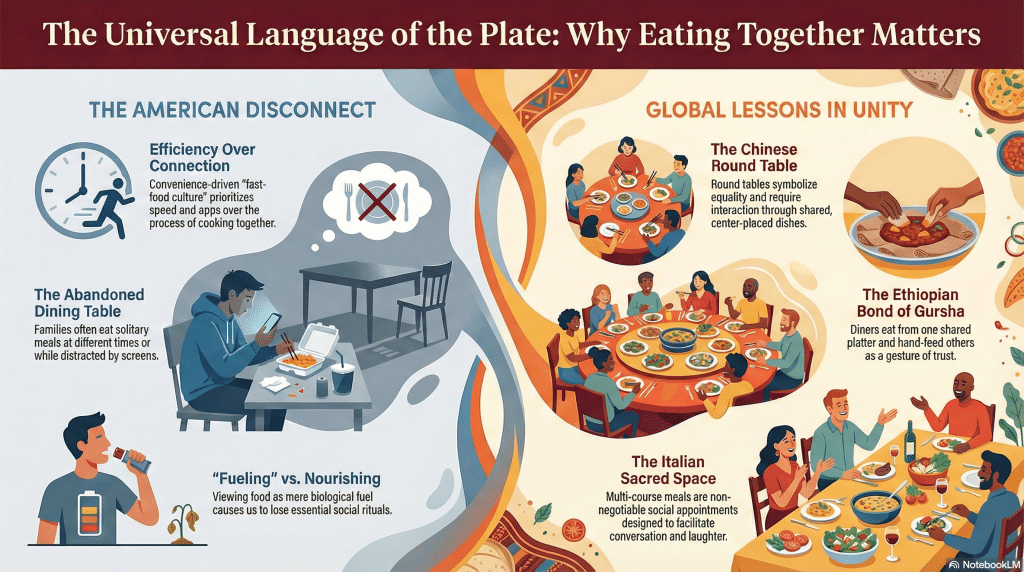
It is the culture of convenience over connection. We value the efficiency of a meal delivered via an app within thirty minutes over the slower, messier process of cooking together.
We define “dinner” as grabbing a burrito on the commute home, or perhaps worse, the increasingly common phenomenon of the solitary household meal.
In many American homes, the dining table—once the altar of family life—has been abandoned. Instead, family members might eat at different times, catering to individual schedules and palates.
If they do eat at the same time, it is often in the living room, plates balanced on knees, eyes glued to the television or smartphones. We are together physically, but emotionally miles apart, sharing space but not an experience. We are consuming calories, but we are starving for connection.
When food becomes merely “fuel”—something to be consumed efficiently so we can get back to “productive” activities or entertainment—we lose the sacred ritual of the shared meal.
We lose the daily check-in, the art of conversation, the passing down of family lore, and the simple, grounding act of looking someone in the eye while passing the potatoes.
Fortunately, the blueprint for reclaiming this connection still thrives around the world. By looking to other cultures, we can relearn the art of the communal meal.
A Global Table: Lessons in Unity Through Food
Across the globe, in diverse societies with vastly different histories, one truth remains constant: how you eat is just as important as what you eat. In these cultures, food is not meant to be taken the “fast route.” It is a slow, deliberate exercise in community building.
Here are eight examples of cultures where the intersection of food and community offers a vital lesson for the modern world.
1. Italian Culture: The Sacred Space of the Table
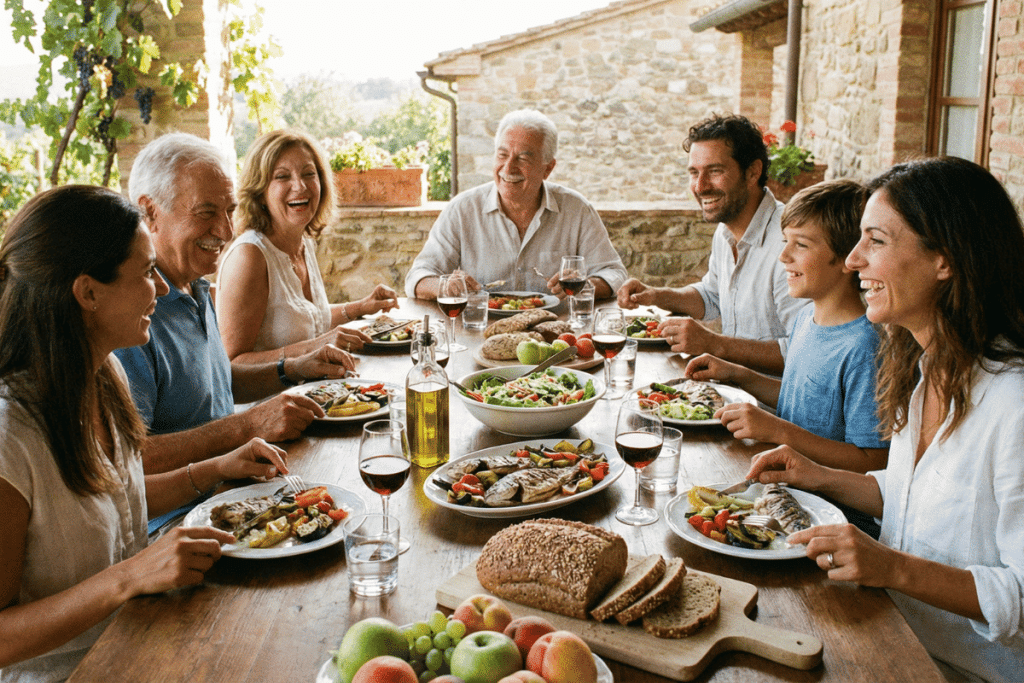
In Italy, the concept of “sad desk lunch” is virtually practically blasphemous. Food is the undisputed cornerstone of Italian life, serving as the primary conduit for family and social gatherings. The Italian meal creates a sacred space where time seems to slow down.
Dinner, particularly the Sunday family lunch, is a non-negotiable appointment for connection. It’s never rushed. It’s a multi-course affair designed to facilitate conversation, debate, laughter, and even arguments.
The structure of the meal itself—antipasti, primo (pasta/soup), secondo (meat/fish), contorno (vegetables)—demands presence. You cannot eat a sprawling Italian feast while looking at your phone. Sharing platters of pasta, tearing pieces from a common loaf of bread, and pouring wine for one another reinforces the bonds of the family unit. In Italy, to eat alone is a sorrow; to eat together is life itself.
2. Chinese Culture: The Symbolism of the Round Table
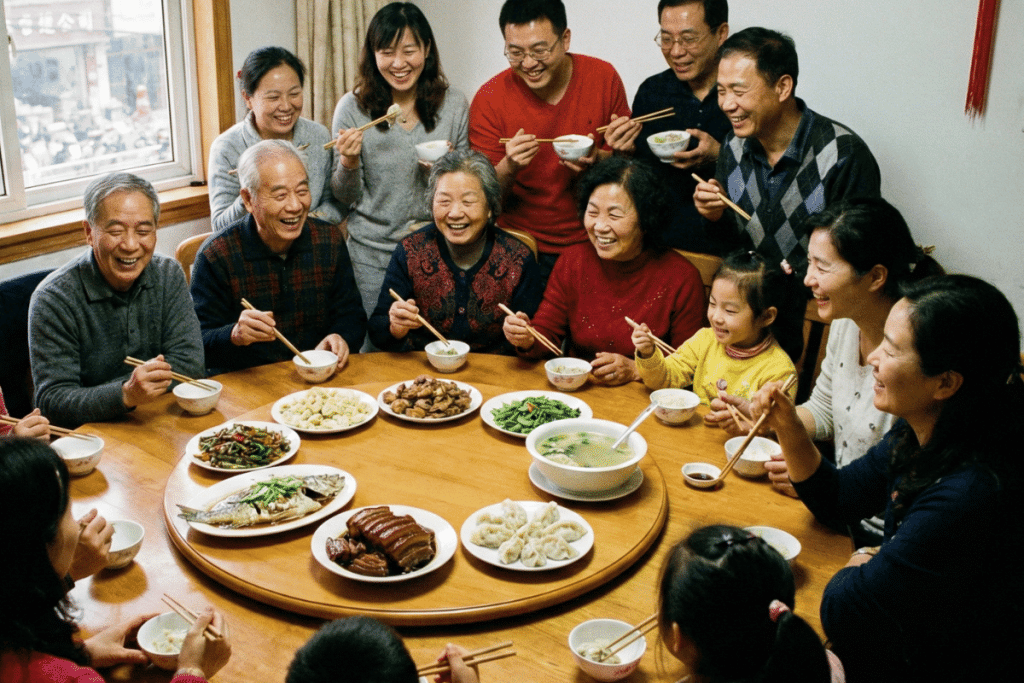
In Chinese culture, food is a profound language of love, respect, and unity. The very setup of a traditional Chinese dining experience dictates community: the round table. Unlike rectangular Western tables possessing a “head” and a “foot,” the round table implies equality and unity, with no beginning and no end.
Meals are rarely served plated individually. Instead, dishes like dumplings, whole fish, roasted meats, and stir-fries are placed in the center, often on a lazy Susan, to be shared by everyone. This style of dining requires interaction; you must acknowledge others to ask for a dish to be passed. Large meals are central to festivals like the Lunar New Year, where specific foods symbolize prosperity and togetherness. The act of using your chopsticks to serve a choice piece of meat to an elder or a guest is a tangible expression of care and respect, cementing social harmony.
3. Indian Culture: A Sensory communal Experience
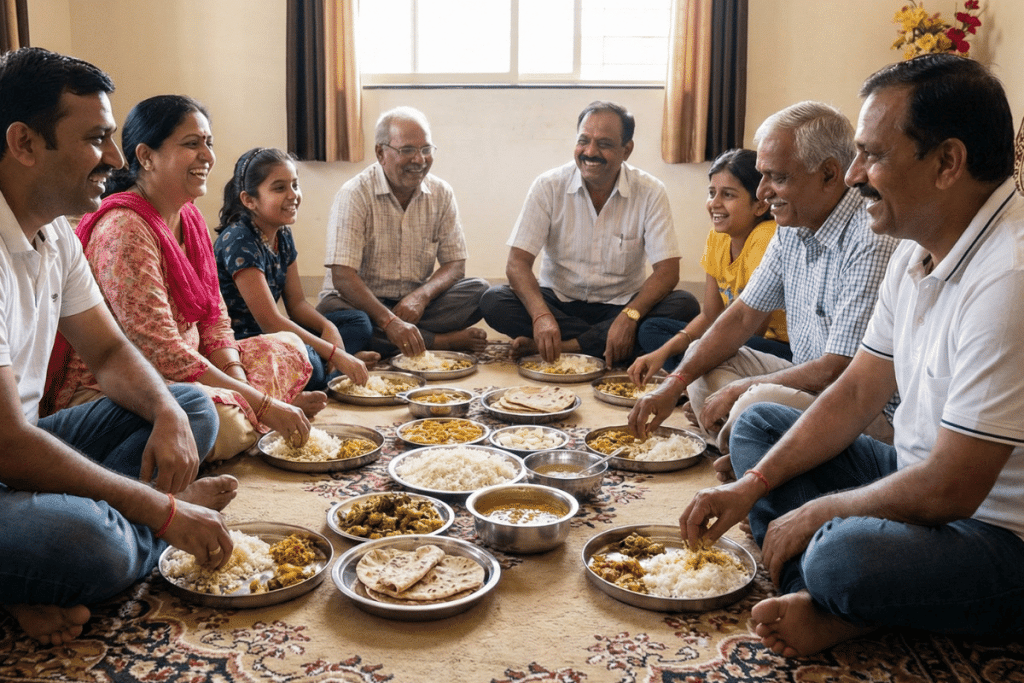
Indian dining is a vibrant, intensely communal affair that engages all the senses. In many traditional households and during festivals like Diwali or Eid, the lines between individual portions blur. Families often sit together on the floor, sharing from bowls or eating from large thalis (platters) containing a diverse array of curries, dals, rice, and breads like naan or roti.
The act of eating with one’s hands, common in many parts of India, creates a tactile connection to the food and, by extension, to the people you are sharing it with. Breaking bread (roti) together isn’t metaphorical here; it’s a physical reality.
The vast diversity of Indian cuisine means that a shared meal is often a complex tapestry of flavors, requiring diners to navigate the experience together, discussing the spice, the texture, and the memory evoked by each bite.
4. Mexican Culture: Food as Collective Celebration
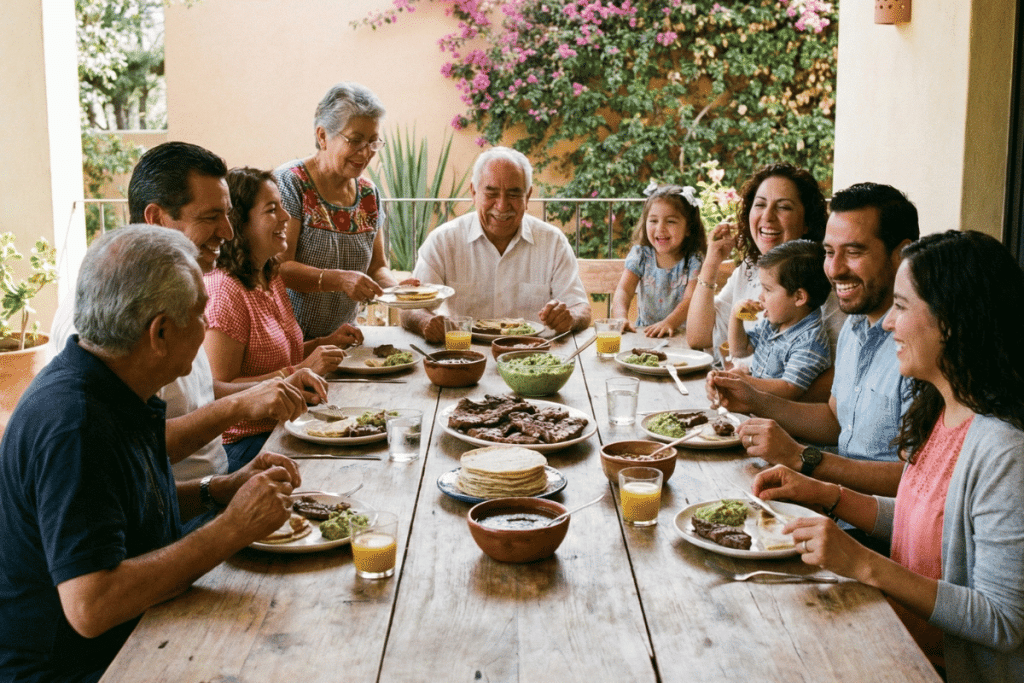
In Mexico, food is the vibrant, beating heart of the culture, inextricably linked to celebration, identity, and even the spiritual realm. Mexican food culture is deeply collective, often involving many hands in the preparation process long before the meal begins.
Think of the tamalada (tamale-making party), where generations gather in the kitchen for a day of labor-intensive cooking, gossiping, and bonding while spreading masa.
The end product is delicious, but the process of making it together is the real nourishment. Communal feasts are central to life, from casual taco gatherings to profound holidays like Día de los Muertos (Day of the Dead), where families build altars piled high with the favorite foods of the departed, sharing meals at gravesites to bridge the gap between the living and the dead. In Mexico, sharing food is the ultimate affirmation of life and community bonds.
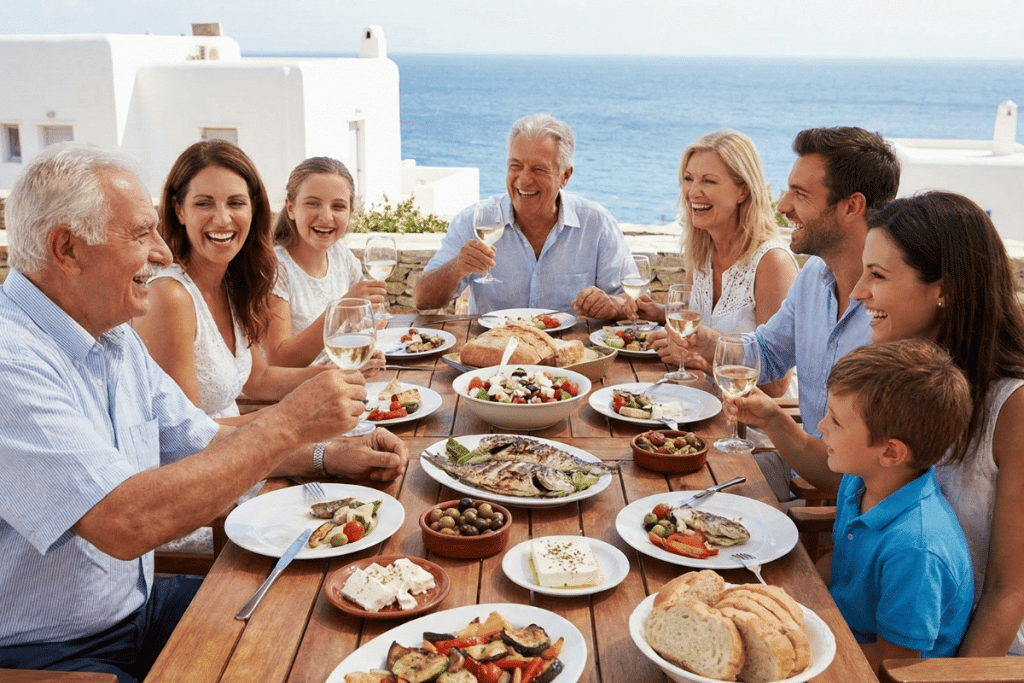
5. Greek Culture: The Art of Philoxenia
If you visit a Greek home, you will not leave hungry. Greek culture places an immense emphasis on philoxenia, literally translating to “love of the stranger,” or hospitality. Food is the primary vehicle for this hospitality.
To not offer food to a guest is a social taboo; to refuse offered food is an insult. Greek meals, much like Italian ones, are boisterous, family-style events meant to foster togetherness.
Traditional dishes like mousaka, grilled souvlaki, and lemon-roasted potatoes are placed in the center of the table. The “mezze” style of dining—numerous small plates of tzatziki, olives, feta, and octopus shared among a group accompanied by ouzo or wine—is designed specifically to extend the duration of social interaction. The food is almost an excuse to gather; the conversation is the main course.
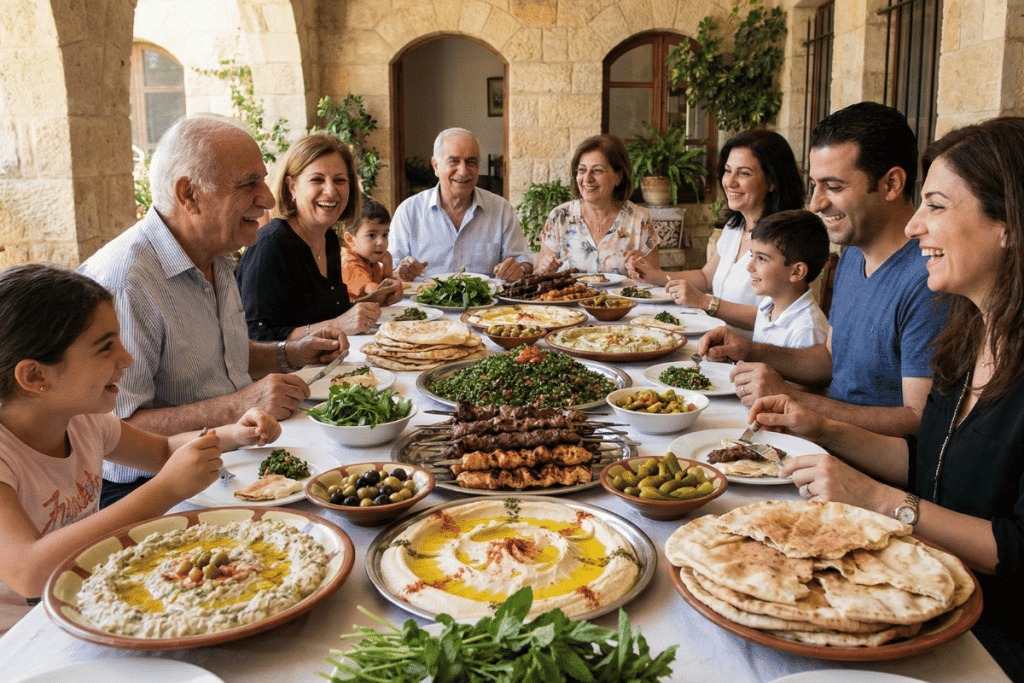
6. Middle Eastern Culture: Generosity on a Platter
Across the diverse cultures of the Middle East, food is the supreme symbol of generosity and hospitality. A host’s reputation is often staked on the abundance of their table. It is shameful to serve only “just enough”; there must always be an overflow, signaling welcome.
Meals are inherently communal. Large platters of hummus, baba ghanoush, tabbouleh, kebabs, and fresh flatbreads are meant to be scooped up and shared by everyone at the table. This style of eating breaks down physical boundaries between diners.
The cultural importance of gathering for food is perhaps most visible during Ramadan, where the daily fast is broken at sunset with the Iftar meal. Communities, families, and even strangers gather nightly to share large feasts, reinforcing social solidarity and charity through the shared experience of hunger and satiation.
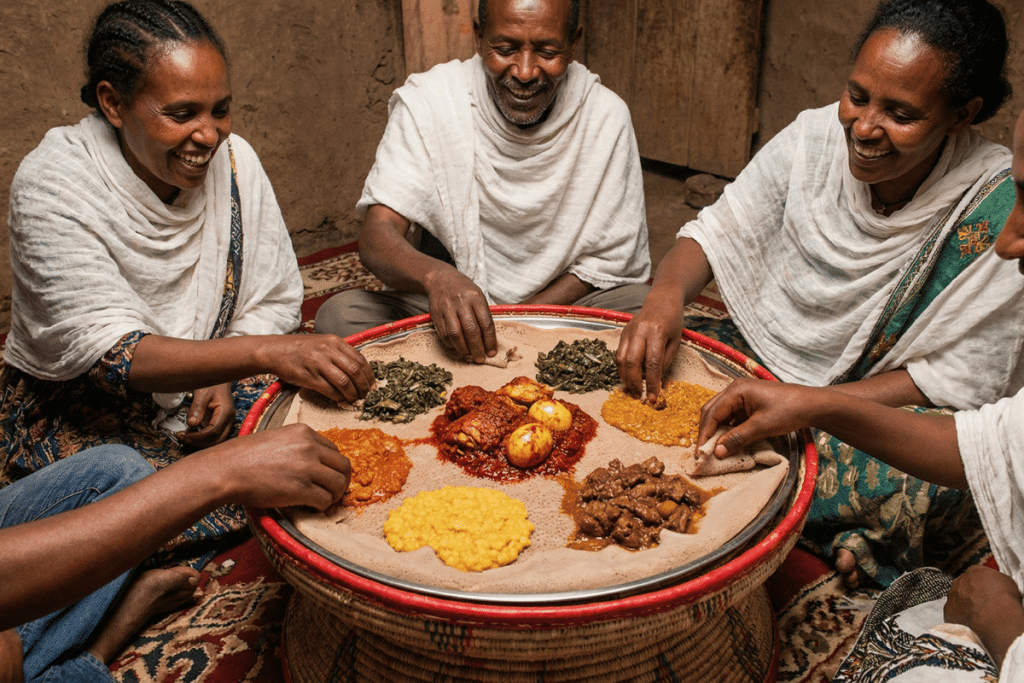
7. Ethiopian Culture: The Bond of Gursha
Perhaps no cuisine emphasizes the communal nature of eating quite like that of Ethiopia. The entire meal is designed around a single, shared platter. A large, spongy sourdough flatbread called injera is spread out, topped with various colorful stews (wats) made of lentils, vegetables, and meats.
There are no utensils. Diners use pieces of injera scooped with their right hand to pick up the stew. Everyone eats from the same central plate, physically symbolizing a shared fate and community.
Furthermore, Ethiopian culture features a beautiful tradition called gursha. This is the act of rolling up a perfect bite of injera and stew and gently placing it into the mouth of someone else at the table as a gesture of love, respect, or friendship. It is an act of intimacy and trust that instantly deepens the bond between diners.
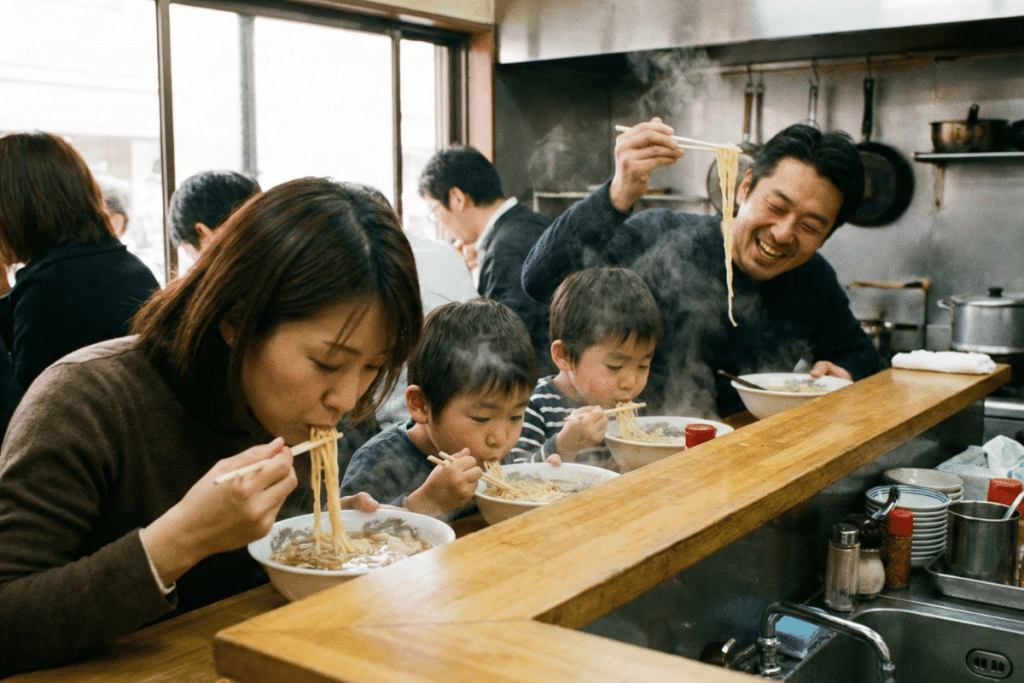
8. Japanese Culture: Aesthetics and Shared Rituals
While Japanese culture is famous for its emphasis on individual perfection and aesthetics, its culinary traditions also harbor deep currents of communal connection. Food in Japan is deeply tied to the seasons and tradition.
While a ramen counter might seem solitary, many Japanese meals are inherently social. The nabe (hot pot) is a quintessential winter dish where ingredients are cooked slowly in a bubbling pot in the center of the table.
Diners add ingredients and serve themselves from the communal broth, creating a cozy, warming environment that encourages conversation. Similarly, festivals like Oshogatsu (New Year) involve families gathering to share osechi-ryori, boxes of meticulously prepared traditional foods, each item holding a symbolic meaning for health, luck, or prosperity in the coming year. The shared consumption of these symbols reinforces family continuity.
Returning to the Table
When we look at these diverse cultures, we see a common thread that we have largely unraveled in our fast-paced modern lives. We see that food is more than nutrients; it is the anchor of our social existence.
The intersection of food and culture is where empathy begins. When we sit at someone else’s table and eat their food, we are internalizing their culture in the most literal sense. It is difficult to hold prejudice against a people whose grandmother’s recipe you have just savored.
“Culinary diplomacy” is a real and potent force; sharing a meal humanizes “the other” and builds bridges where politics often digs trenches.
We don’t need to cook elaborate feasts every night to recapture this magic. We simply need to slow down and re-prioritize the act of eating together. We need to turn off the TV, put away the phones, and return to the table.
Whether it’s sharing a pizza, a pot of curry, or a simple roasted chicken, the act of facing one another and breaking bread is the oldest, most effective technology we have for connection. In a world starved for unity, the cure might just be in the kitchen.
Deep Dive Podcast
Listen to our podcast.
At A Bus On A Dusty Road, we talk about travel, life, and ex-pat living. We are all about “Living Life As A Global Citizen.” We explore social, cultural, and economic issues and travel.
We would love to have you be part of our community. Sign up for our newsletter to keep up-to-date by clicking here. If you have any questions, you can contact me, Anita, by clicking here.
Listen to our Podcast called Dusty Roads or the Deep Dive By Dusty Roads. You can find it on all major podcast platforms. Try out listening to one of our podcasts by clicking here.
Subscribe to our A Bus On A Dusty Road YouTube Channel with great videos and information by clicking here.
Related Questions
The Vietnamese Bun Cha Food Dish, All You Need To Know
Bún Chả is a Vietnamese food dish that is thought to have originated in North Vietnam. It is made from rice noodles, grilled pork, salad, and a Bún Chả fish sauce mixture. It is a dish you can learn to make and serve in your home. Bún Chả became very famous when the U.S. President Barack Obama sat down with CNN’s Anthony Bourdain in a small local Bún Chả noodle shop in Hanoi, Vietnam.
Read our blog The Vietnamese Bun Cha Food Dish, All You Need To Know by clicking here.
Why is Rice Important to the Vietnamese?
Rice is essential to the Vietnamese because rice is one of the world’s most important staple foods. Due to its climate, Vietnam is one of the world’s leading rice producers. As with many things in Vietnam, there is folklore and legends about rice and rice production. You can visit many places in Vietnam to see some spectacular rice fields and rice terraces.
You can find out more about this by reading our blog, Why Rice is Important in Vietnam, What You Need To Know by clicking here.
What About Vietnam’s Morning Exercise?
The mornings in Vietnam are always extremely active, with people out and about exercising. It is usually safe to go out early in Hanoi, Vietnam. The streets are always bustling with a lot of activity and excitement. People in the city tend to start their days very early. You must also get up early to see the early morning exercise. There are a lot of places in Hanoi where you can see a lot of early-morning exercisers. Starting the day early is a habit that many people have throughout all Asia.
You can see a video about morning exercise in Vietnam and read our blog called Early Morning Exercise in Hanoi, Vietnam, What You Need to Know by clicking here.