
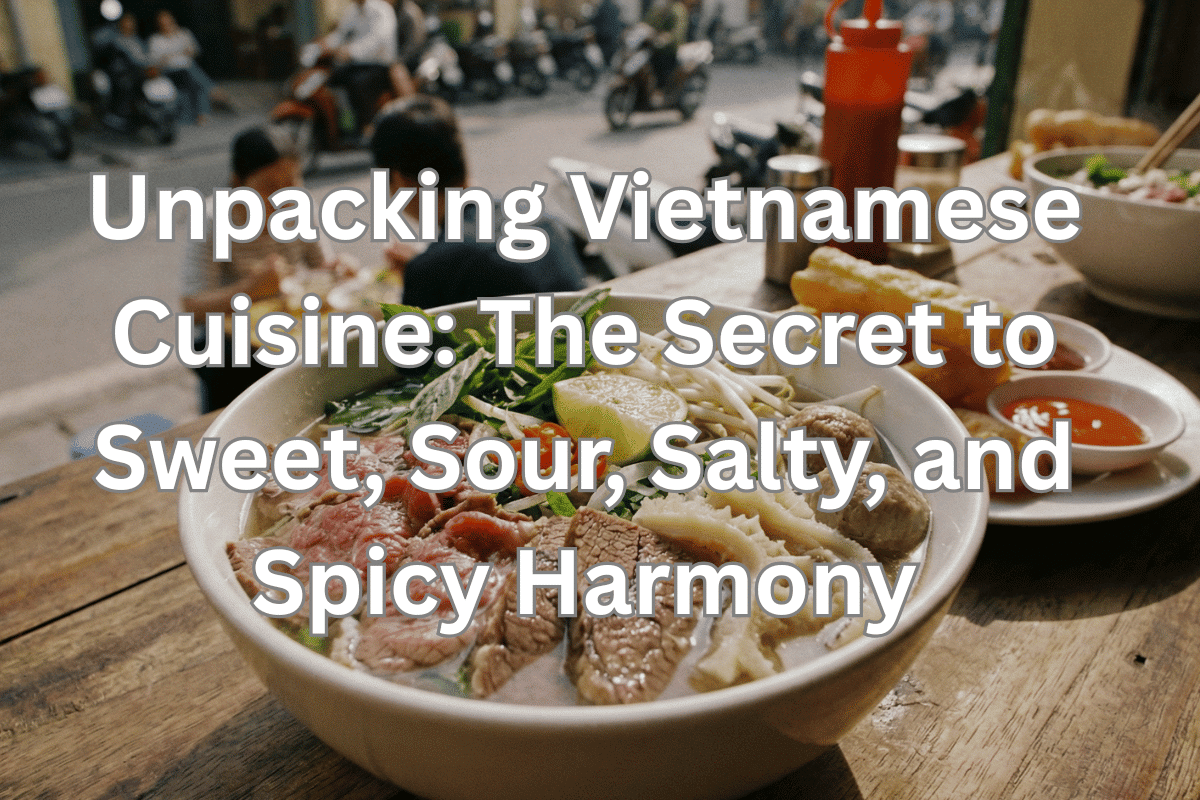
Think you know Vietnamese food? Most people immediately think of iconic dishes like pho or banh mi, but the true magic of Vietnamese cuisine isn’t just in these beloved recipes—it’s in the subtle alchemy of a few essential ingredients. These foundational components—fish sauce, lime, fresh herbs, and chili—create a delicate balance of sweet, sour, salty, and spicy flavors that define the heart and soul of Vietnamese cooking.
As I live and work in Vietnam, read on as we’ll unpack the secrets behind these flavors, exploring how they come together to create the vibrant, harmonious taste that makes Vietnamese food so unforgettable. From the art of balancing these elements to tips for recreating this magic in your own kitchen, let’s dive into the essence of Vietnamese cuisine.
Table of Contents
- The Myth of the “Secret Vietnamese Ingredient”
- The Pillars of Vietnamese Flavor
- The Alchemy of Balance
- Beyond the Recipe: Sensory Cues
- Deep Dive Podcast
- Related Questions
The Myth of the “Secret Vietnamese Ingredient”
When it comes to Vietnamese food, there’s a common misconception that there’s some elusive “secret ingredient” that makes it so special. People often search for one magical component that transforms a dish into something extraordinary. But the truth is, there isn’t just one secret ingredient.
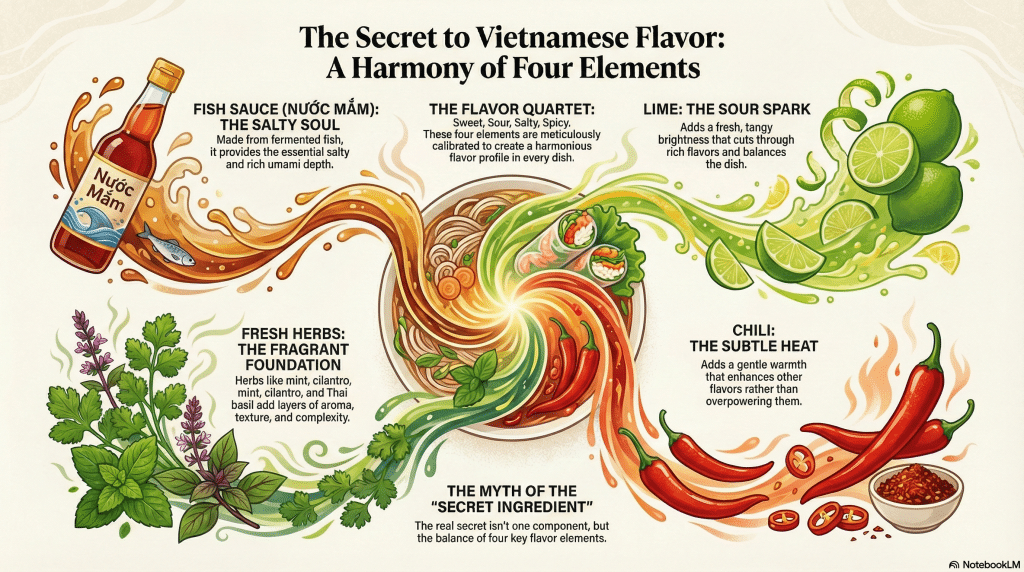
Instead, Vietnamese cuisine relies on a foundational “flavor quartet”: sweet, sour, salty, and spicy. These four elements are not just present in every dish—they are meticulously balanced to create a harmonious flavor profile that is greater than the sum of its parts.
For example, when you taste a bowl of pho, it’s not just the savory broth that makes it memorable. It’s the interplay of the sweetness from charred onions and spices, the saltiness of fish sauce, the tang of lime, and the subtle heat from fresh chili. This balance is what gives Vietnamese food its complexity and depth, elevating it beyond simple recipes into an art form.
The Pillars of Vietnamese Flavor
Let’s take a closer look at the essential ingredients that form the backbone of Vietnamese cuisine. Each of these components plays a unique role in creating the iconic sweet, sour, salty, and spicy balance.

Fish Sauce (Nước Mắm): The Soul of Vietnamese Cooking
Fish sauce is much more than just a salty seasoning—it’s the soul of Vietnamese cuisine. Made from fermented fish and salt, nước mắm is rich in umami, adding depth and complexity to dishes.
Premium fish sauce, often sourced from regions like Phú Quốc, is prized for its purity and balance. It’s not overly fishy or salty; instead, it delivers a nuanced flavor that enhances everything from soups to marinades to dipping sauces.
In dishes like nuoc cham (Vietnamese dipping sauce), fish sauce is combined with sugar, lime juice, and chili to create a perfect balance of salty, sweet, sour, and spicy. Without fish sauce, Vietnamese food simply wouldn’t be the same.
Lime: The Bright Spark of Vietnamese Cuisine
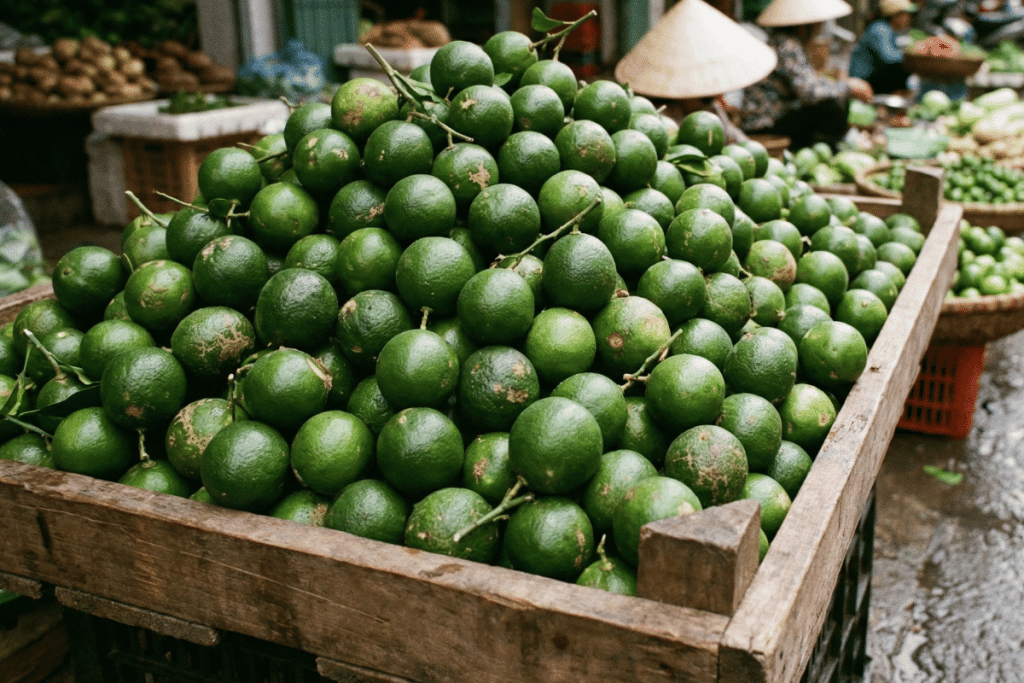
Lime is the unsung hero of Vietnamese cooking, providing a fresh, tangy brightness that cuts through rich flavors and adds a zesty kick.
Whether it’s squeezed over a bowl of pho or mixed into nuoc cham, lime juice brings a refreshing acidity that balances the richness of broths, meats, and fried dishes. It’s not just about adding sourness—it’s about creating contrast and harmony, ensuring no single flavor dominates the dish.
Fresh Herbs: The Fragrant Foundation
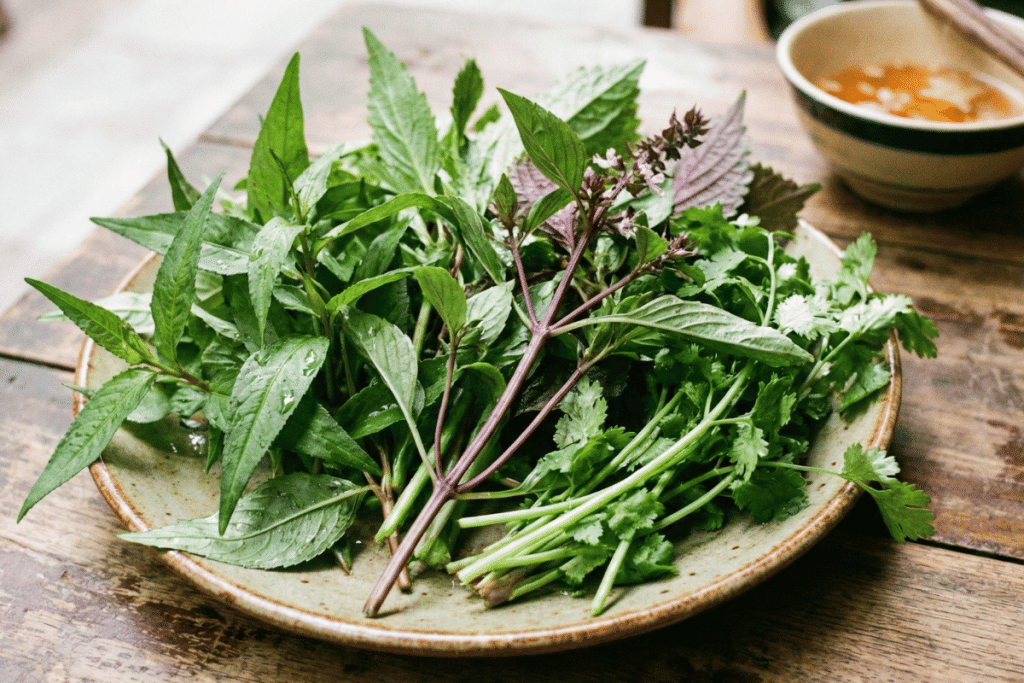
If fish sauce is the soul of Vietnamese cuisine, fresh herbs are its beating heart. Herbs like mint, cilantro, Thai basil, and perilla are used generously in Vietnamese dishes, not just as garnishes but as integral components of the flavor profile.
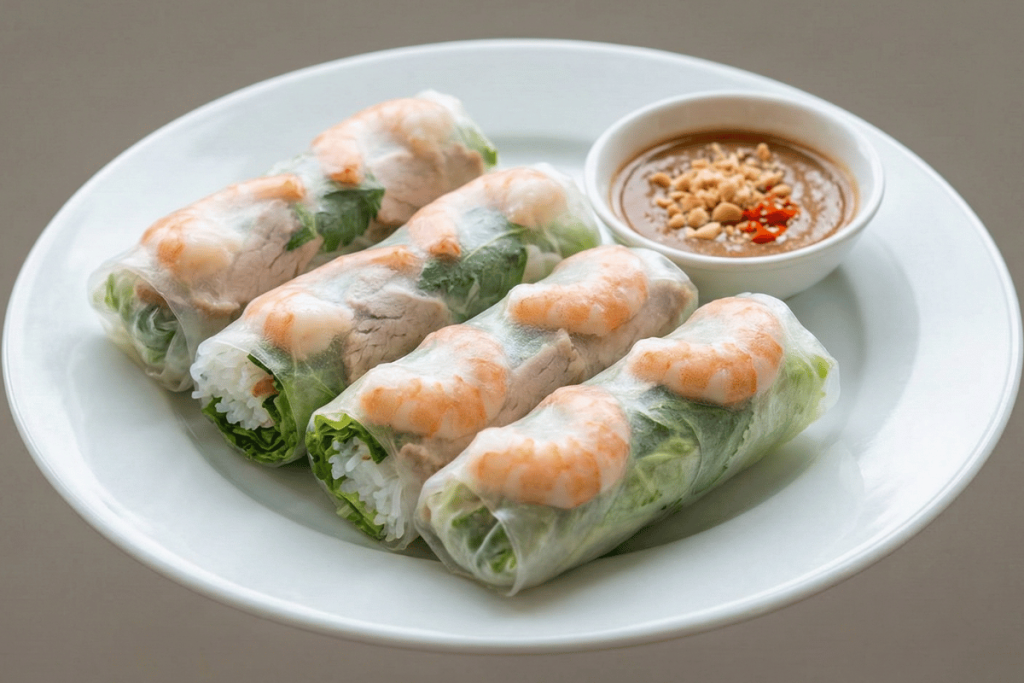
These herbs add layers of fragrance, texture, and complexity to dishes. For example, the combination of Thai basil and cilantro in pho enhances the broth’s aroma, while mint and perilla leaves in fresh spring rolls (goi cuon) provide a burst of freshness with every bite.
The use of fresh herbs is one of the reasons Vietnamese cuisine feels so vibrant and alive—it’s a sensory experience that engages your taste buds, nose, and even your eyes.
Chili: The Subtle Heat
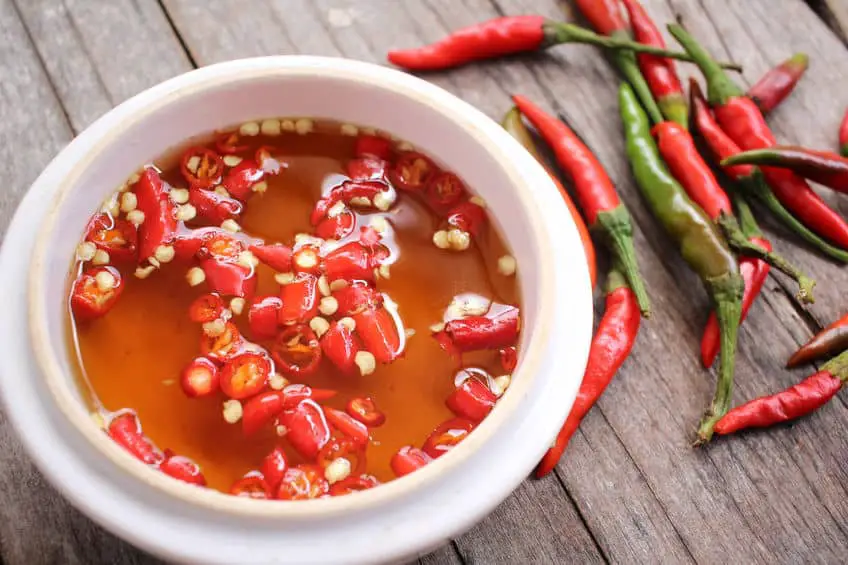
Chili brings the spicy element to Vietnamese food, but it’s rarely overwhelming. Instead of dominating the dish, chili is used to enhance the other flavors, adding a gentle heat that lingers on the palate.
Whether it’s fresh chili slices in pho, chili garlic paste in stir-fries, or chili flakes in nuoc cham, this ingredient adds a touch of excitement without overpowering the dish’s delicate balance.
The Alchemy of Balance
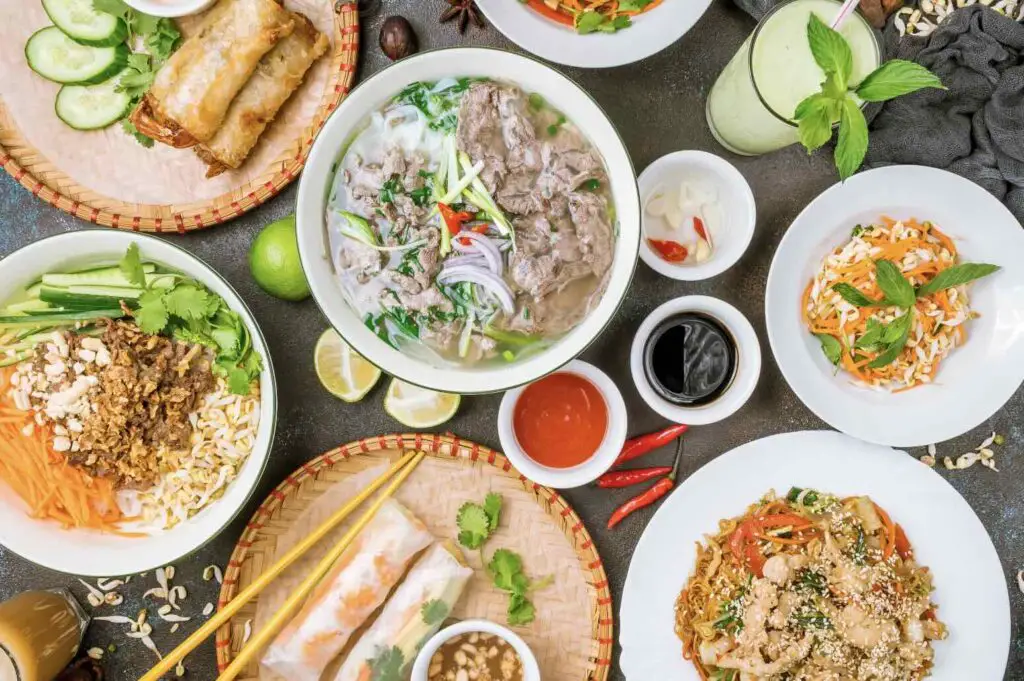
The true magic of Vietnamese cuisine lies in the art of balance. It’s not enough to simply include sweet, sour, salty, and spicy elements—they must be perfectly calibrated to create a harmonious flavor profile.
Take nuoc cham as an example. This iconic dipping sauce combines fish sauce (salty), sugar (sweet), lime juice (sour), and chili (spicy). The key to a perfect nuoc cham is not just adding these ingredients but adjusting their quantities based on taste. A little more lime juice can brighten the sauce, while a touch more sugar can soften its sharpness.
This same principle applies to other dishes. A bowl of bun cha (grilled pork with vermicelli) might include sweet caramelized pork, tangy pickled vegetables, salty fish sauce, and spicy chili. Each component is carefully balanced to create a dish that’s flavorful but not overwhelming.
The layering of flavors is what sets Vietnamese cuisine apart. Rather than hitting you with one dominant taste, it offers a symphony of flavors that unfold with every bite.
Beyond the Recipe: Sensory Cues
One of the most fascinating aspects of Vietnamese cooking is that it’s not just about following a recipe—it’s about using your senses to create the perfect balance.
Smell is a crucial part of the process. The aroma of fresh herbs, the pungency of fish sauce, and the zing of lime all signal whether a dish is on the right track. Taste memory also plays a significant role, as many Vietnamese cooks rely on their instincts and experience to adjust flavors rather than measuring precise quantities.
For home cooks, this can be a bit intimidating at first, but it’s also incredibly empowering. Once you learn to trust your senses and understand the interplay of flavors, you can start creating authentic Vietnamese dishes without being tied to a recipe.
Your Vietnamese Culinary Journey Starts Now
The beauty of Vietnamese cuisine lies in its simplicity and sophistication. By mastering just a few foundational ingredients—fish sauce, lime, fresh herbs, and chili—you can unlock a world of flavor that’s both vibrant and deeply satisfying.
Don’t be afraid to experiment. Try making your own nuoc cham and adjusting the balance of flavors until it’s just right for your palate. Explore regional variations of Vietnamese dishes, from the rich, hearty flavors of the north to the bold, spicy dishes of the south.
Most importantly, remember that the magic of Vietnamese cooking isn’t about following strict rules—it’s about understanding the art of balance and letting your creativity shine.
So, what’s your favorite Vietnamese dish? Have you experimented with these foundational ingredients in your own cooking? Share your thoughts and discoveries in the comments below—we’d love to hear from you!
Vietnamese cuisine is a celebration of balance, harmony, and tradition. By understanding the role of its foundational ingredients and the art of flavor interplay, we can deepen our appreciation for this vibrant culinary tradition. Whether you’re a seasoned chef or a curious home cook, let these insights inspire you to explore the magic of Vietnamese food in your own kitchen.
Happy cooking, and may your culinary journey be as vibrant and flavorful as the dishes you create!
Deep Dive Podcast
Check out out Deep Dive podcast!
At A Bus On A Dusty Road, we talk about travel, life, and ex-pat living. We are all about “Living Life As A Global Citizen.” We explore social, cultural, and economic issues and travel.
We would love to have you be part of our community. Sign up for our newsletter to keep up-to-date by clicking here. If you have any questions, you can contact me, Anita, by clicking here.
Listen to our Podcast called Dusty Roads. You can find it on all major podcast platforms. Try out listening to one of our podcasts by clicking here.
Subscribe to our A Bus On A Dusty Road YouTube Channel with great videos and information by clicking here.
Related Questions
The Vietnamese Bun Cha Food Dish, All You Need To Know
Bún Chả is a Vietnamese food dish that is thought to have originated in North Vietnam. It is made from rice noodles, grilled pork, salad, and a Bún Chả fish sauce mixture. It is a dish you can learn to make and serve in your home. Bún Chả became very famous when the U.S. President Barack Obama sat down with CNN’s Anthony Bourdain in a small local Bún Chả noodle shop in Hanoi, Vietnam.
Read our blog The Vietnamese Bun Cha Food Dish, All You Need To Know by clicking here.
Why is Rice Important to the Vietnamese?
Rice is essential to the Vietnamese because rice is one of the world’s most important staple foods. Due to its climate, Vietnam is one of the world’s leading rice producers. As with many things in Vietnam, there is folklore and legends about rice and rice production. You can visit many places in Vietnam to see some spectacular rice fields and rice terraces.
You can find out more about this by reading our blog, Why Rice is Important in Vietnam, What You Need To Know by clicking here.
What About Vietnam’s Morning Exercise?
The mornings in Vietnam are always extremely active, with people out and about exercising. It is usually safe to go out early in Hanoi, Vietnam. The streets are always bustling with a lot of activity and excitement. People in the city tend to start their days very early. You must also get up early to see the early morning exercise. There are a lot of places in Hanoi where you can see a lot of early-morning exercisers. Starting the day early is a habit that many people have throughout all Asia.
You can see a video about morning exercise in Vietnam and read our blog called Early Morning Exercise in Hanoi, Vietnam, What You Need to Know by clicking here.